Camping, castles and the caste system

20181125_042157.jpg

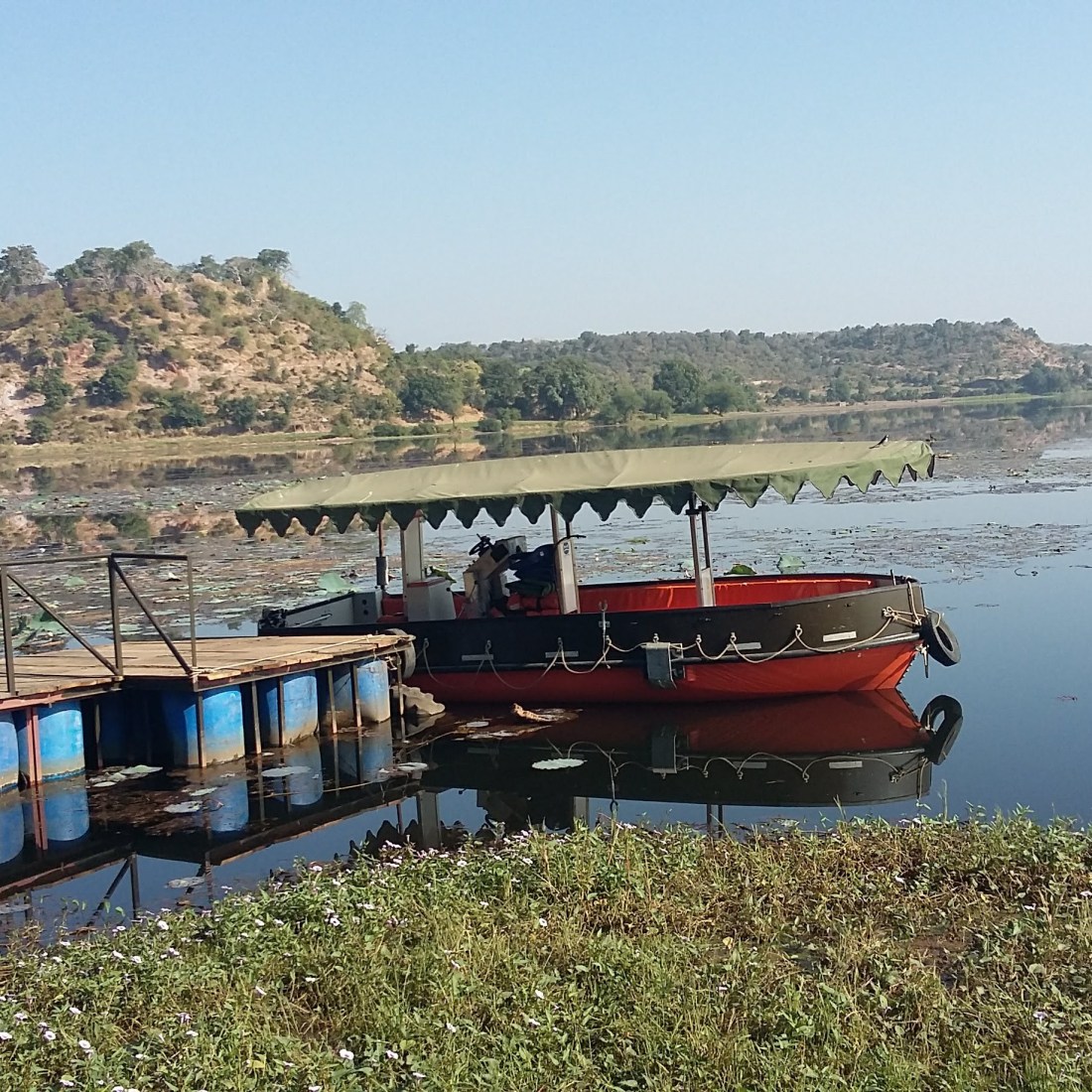
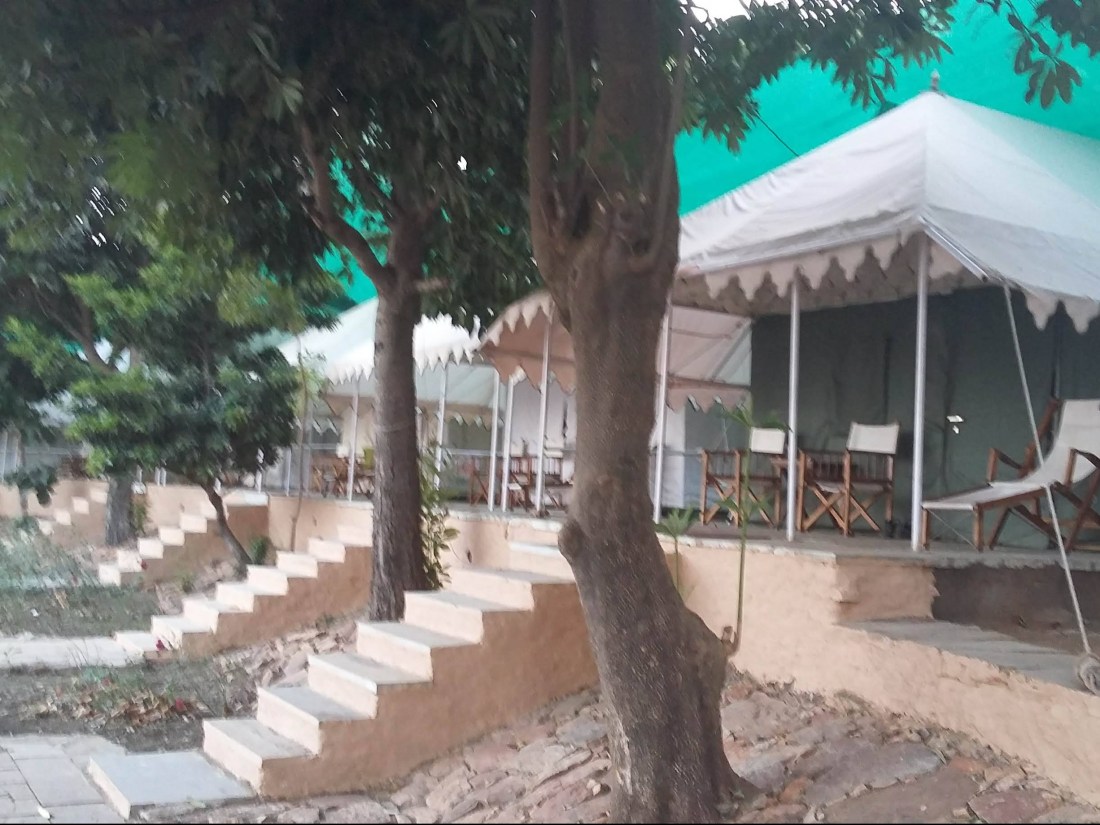
We arrive at Paangarth Camping ground, owned by the Maharajah of Bijapur, mid-afternoon after a 3-hour trip on a local train and a 90-minute jeep ride. Tonight, we are glamping, India style, all part of the extraordinary itinerary carefully planned by Intrepid whose aim is for us to experience the ‘real’ India. We settle into our tent, with a very comfortable double bed, a proper toilet and lukewarm shower. I’m all for the real Indian experience, but a proper toilet is always appreciated! After a strange lunch of chips (the first on this trip!) and toasted cheese salad sandwiches, we enjoy a leisurely afternoon reading, listening to music, drinking chai and strolling around the campsite which is built next to a man-made lake, where the locals farm water chestnuts.
20181124_115549.jpg

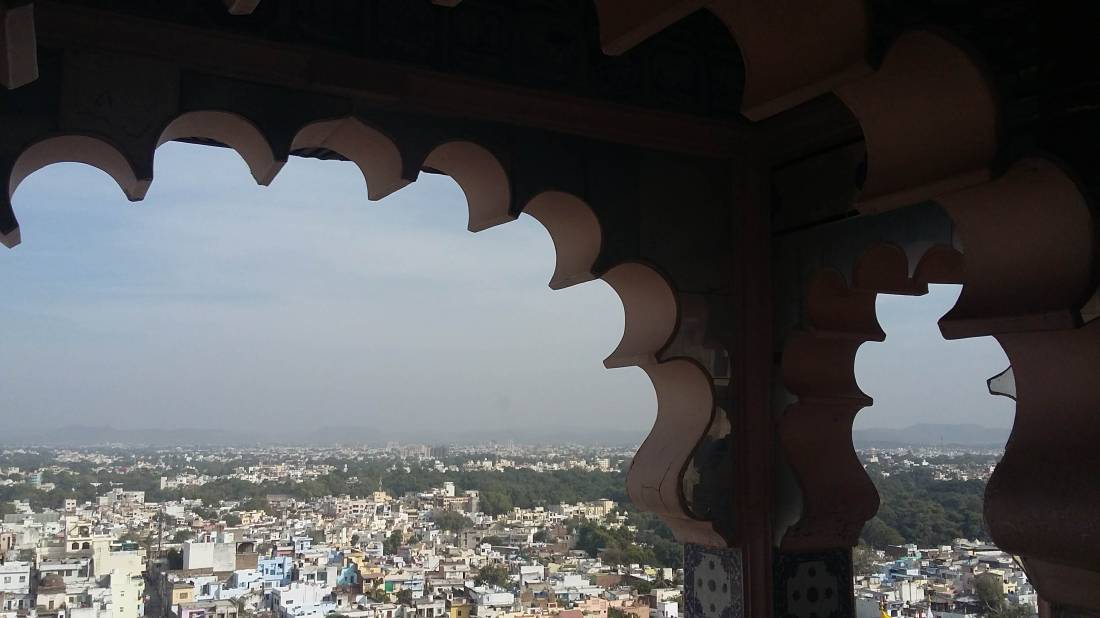
The muted colours of dusk start to spread across the open skies and the campfire and candles are lit. As we gaze into the flames, our guide, Javed tells us that we are ‘now ready’ to hear about the caste system in India. The caste system has been a part of Indian culture which dates back many thousands of years and crosses the boundaries of all religions and countries in this continent and includes Pakistan, Bangladesh and Sri Lanka. Although there has been a softening of the boundaries since India become a democratic country, some of the traditions and beliefs around this system still exist today. Before Independence in 1947 India was not one country but made up of 372 smaller kingdoms, 160 of which were ruled by powerful and wealthy Mahayana’s ( king of kings). Since independence the Mahayana’s and Maharajah’s no longer have power, although many have become politicians and have retained great wealth within their families. After our night camping we move to Bijapur castle, which is owned by the Maharajah of Bijapur and is now run as a heritage hotel. We meet the Maharajah at dinner and he invites us to a yoga session with him on the roof of the castle at dawn the next morning…… a truly magical experience.
20181126_094300

Sitting around the fire Javed explains that there are 5 main levels in the caste system, and many sub layers within each level. The highest caste is the priest or Brahmin caste, the next is the warrior caste (which are mostly the maharajahs), then the merchant, lower caste and finally the untouchables. The caste system is not based on either wealth or education, and we learn that caste is identified through surname. In fact, the man responsible for writing India’s constitution, which has revolutionised rights for people from the lower castes was himself from the untouchables caste and studied law at Oxford University. He has ensured that a minimum of 40% of government employees should be from the untouchable or lower castes. The only way you can move from one caste to another is for a woman to marry a man of a higher caste, where she will then adopt his caste as will their children. However as arranged marriages are still very common In India and families ensure that both the prospective husband and wife are from the same caste, this is unlikely to happen. Although traditions are changing some older people from a higher caste would not touch a person from the untouchable caste, or indeed anything that they had touched. The tradition of the Indian greeting where palms are together, fingers pointing upwards, head bowed followed by ‘Namaste’ allows people to greet each other without being touched. As an Indian you would then exchange names (including surname identifying your caste) and a handshake (or not) would then follow depending on your caste.

As our evenings of camping, castles and castes end there are still many unanswered questions, and we have many more weeks ahead of us before we can even begin to understand the complexity of Indian culture.


The Tiger

tiger-photo.jpg

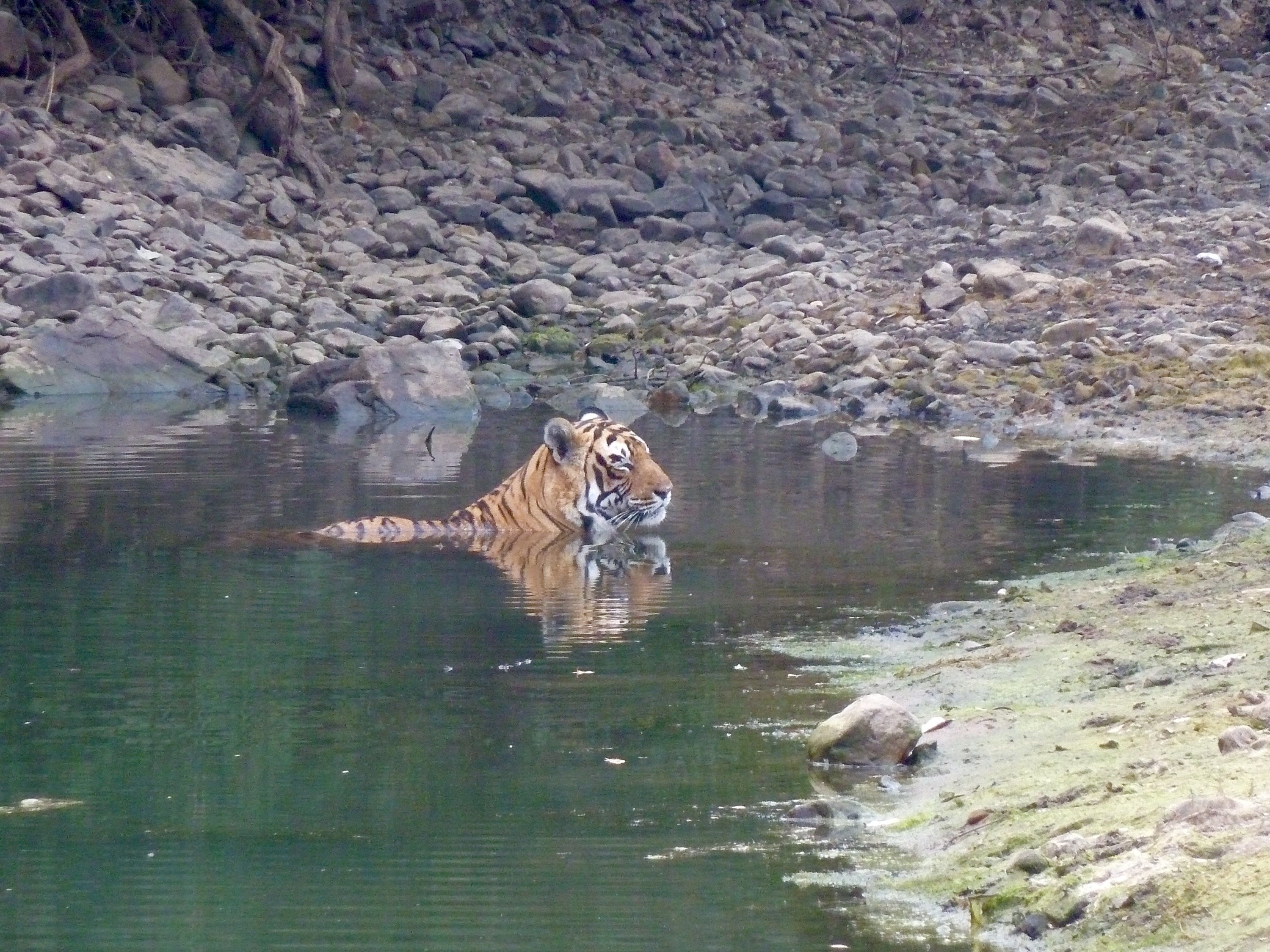
We enter Ranthembore National park late afternoon, home to samba, antelope, crocodile, white spotted deer and 26 species of snake including many poisonous water snakes and the cobra. We scan eagerly around our open top jeep. We are here to catch a glimpse of one of the most feared and majestic animals in India…… the Bengal tiger. We learn from our guide that tigers are solitary animals, spending only a few hours together with their mating partner before returning to their own territory of around 20-30 square kilometres. There are 60 Bengal tigers in the park and 5-6 in the area of land that our jeep will be covering during this safari. Tiger numbers are stable in the park, but we learn that 5 were recently poisoned by poachers, despite long prison sentences. Tiger parts are actively sought after in the lucrative Chinese medicine market and can be sold for vast sums of money. There are 2 ways of locating a tiger in Rathembore park. You may be lucky enough to come across a tiger print on the trail, but the most likely is to follow an alarm call made by the animals it hunts. Our guide tells us that there is about a 10% chance that we might spot a tiger during our 90-minute safari.  Suddenly we here an alarm call and the jeep races to a shallow river bed, where we spot him, a 4-year-old male, stretched out, cooling himself after dinner. The jeep stops around 30 meters away and we zoom in our camera lenses and binoculars. He is a regal animal indeed, his huge square nose is in the air, sniffing and he turns and looks straight at us…. we are transfixed. His amber eyes, meticulously groomed stripes and white jawline and neck emphasise his charming but deadly face. And then, he yawns, and he shows us his jawline and teeth…they are huge. He stretches first one giant paw and then the other before heaving himself out of the water and slowly wandering off towards the tree line.

We have seen a tiger, everyone is smiling and the word on our lips is ‘wow’!

Holy Cow!

20181123_1132381

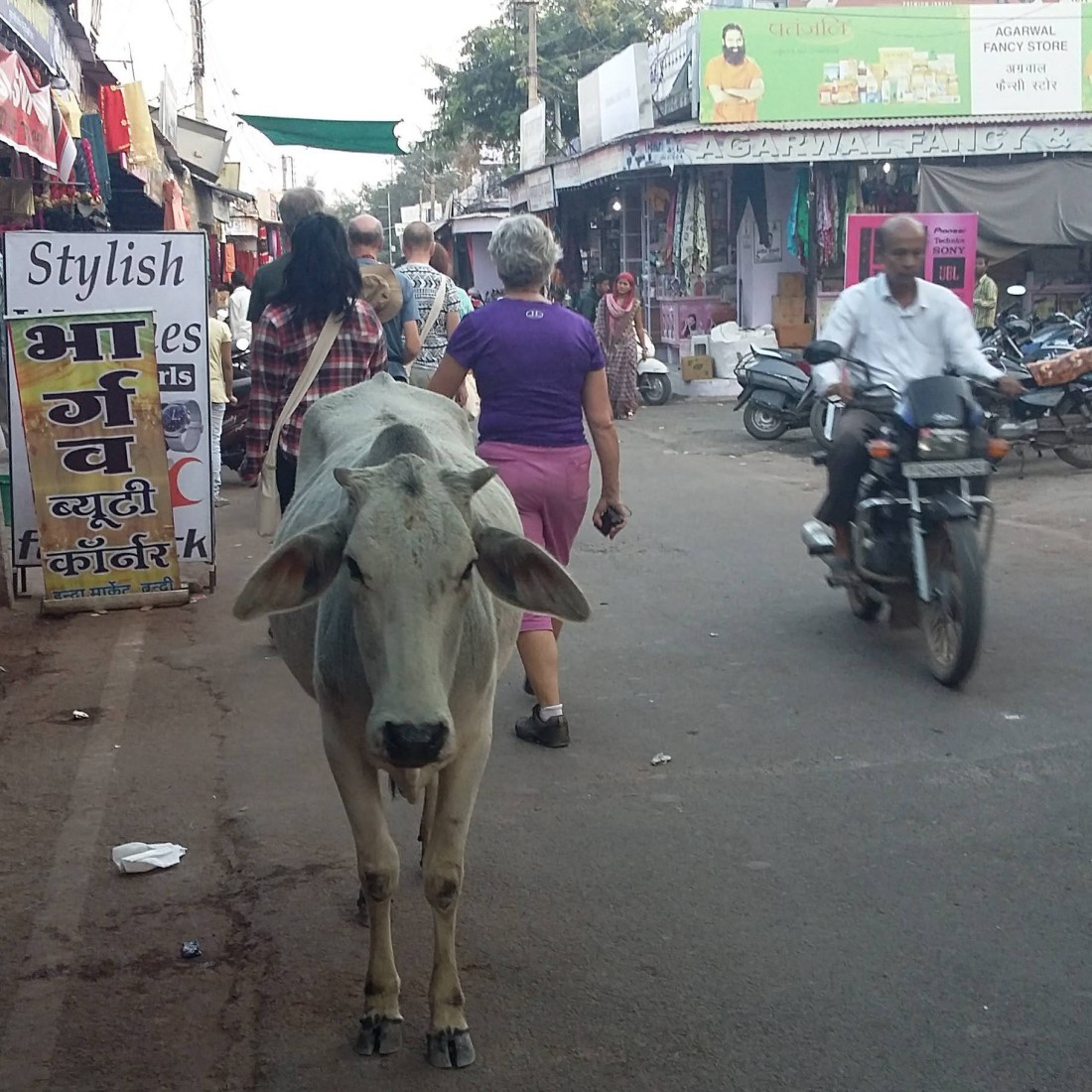
We speed through the town of Bundi in an ancient jeep, built with Indian Tata steel, light seeping through its rusty holes, clinging on for dear life. We hit a roundabout (of sorts) and seem to turn right instead of going left and there in the middle of one of the busiest crossings in Bundi is…. a family of cows! Some are sitting, some are standing, and others are wandering aimlessly across the road. Of course, cows in India are a very common sight. They are everywhere…. on the main streets, up alleyways, in the markets and even at the railway station.  They amble slowly side by side the jeeps, tuk tuk’s, bicycles and cars that pack the streets of India’s towns and cities. They have the right of way on the road and are free to roam the streets by day, returning to the families that own them by dusk. Cows in India are highly respected, and beef is not eaten by its indigenous people, however families often own their own cow for milking. In India anyone found harming a cow is imprisoned and we learn that cows are ceremoniously cremated (like humans) on their death. Cows are particularly revered in the Hindu religion, of whom most are vegetarian. Legend has it that Lord Krishna (the 8th incarnation of Lord Vishnu) was very fond of the cows his family kept for milking and first granted them their holy status. Rumour also has it that he had 1600 girlfriends, after denouncing demons which were trapped within their bodies. Make of that what you will!

They come in all shapes and sizes, some are cute with big brown eyes and floppy ears, however most are what could only be described as scraggy. All seem chilled out, totally oblivious to the chaos around them, but project an air of confidence that their holy status will protect them from whatever the frenzied streets of India can throw at them. I can’t help but smile every time I see one….. all hail the cow!

Our intrepid urban adventure in Jaipur

20181121_0057061.jpg

Intrepid…… bold, courageous, fearless

Adventure……escapade, venture, journey

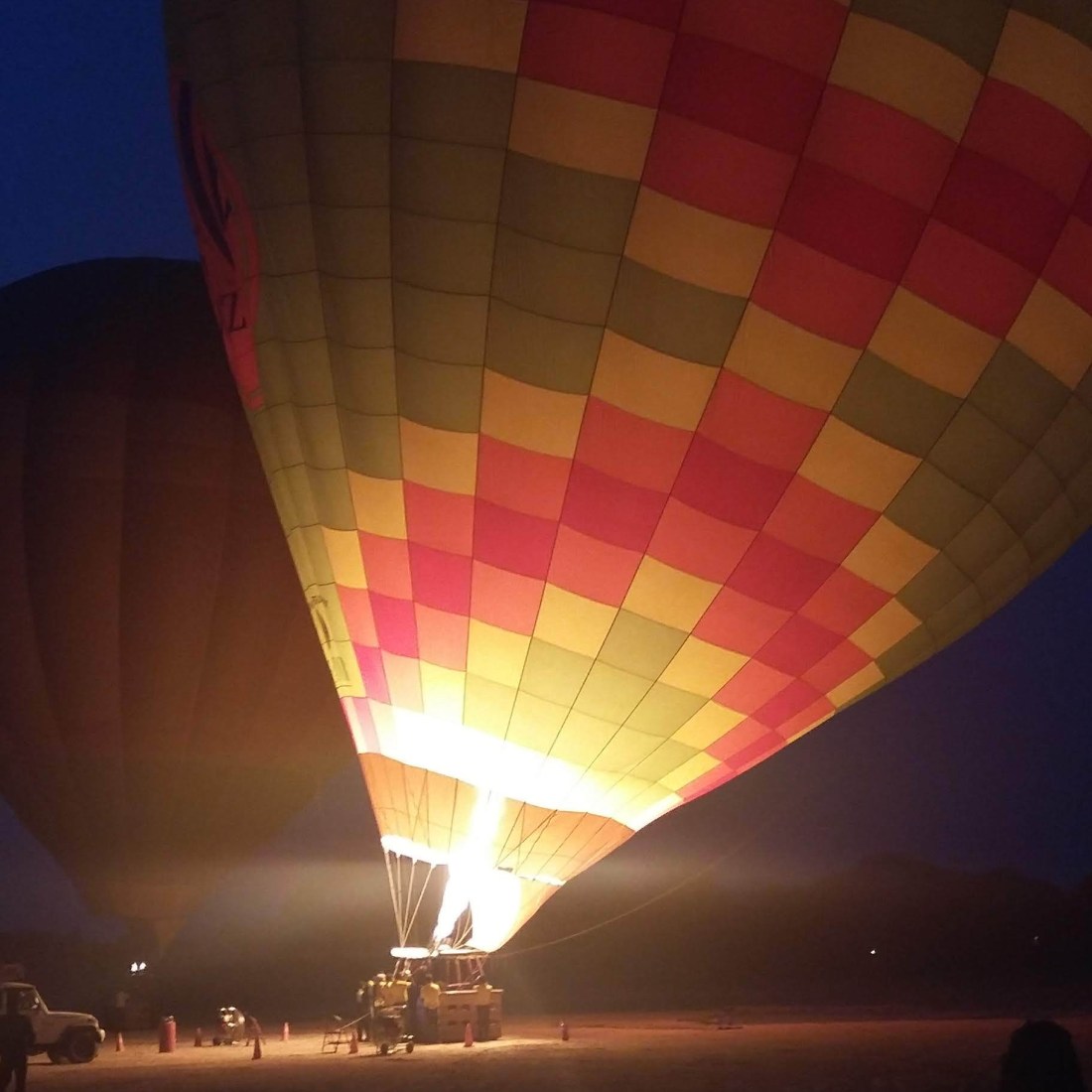
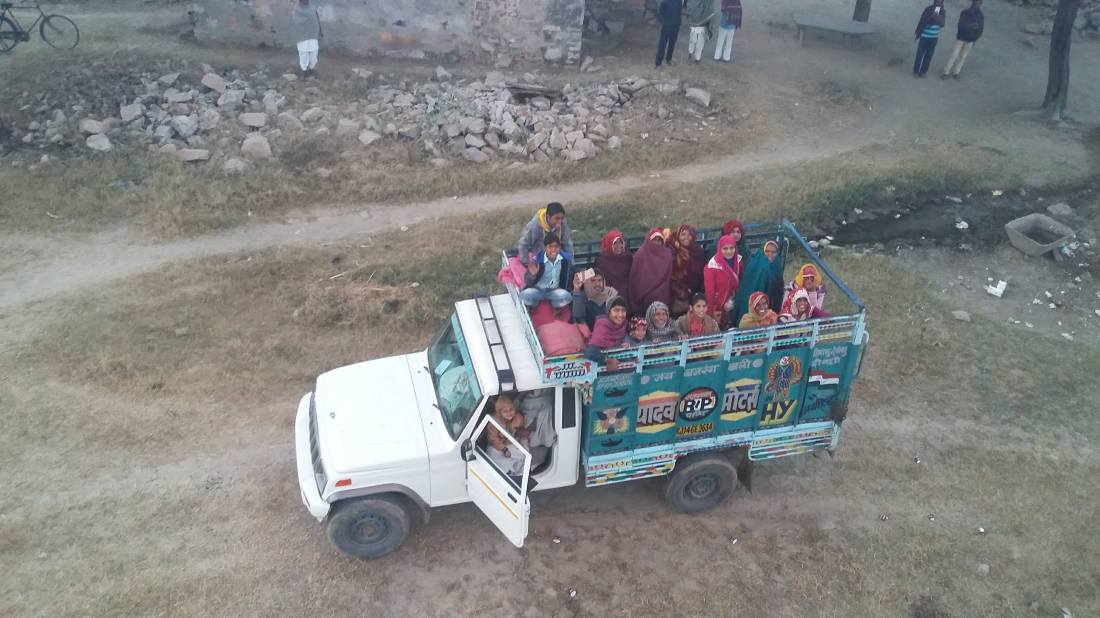
Its 4.30am, and I’m waiting for the transport that will take 5 of us on a balloon safari to the east of Jaipur, the ‘Pink City’. When we arrive at our destination it is still dark and the 2 balloons which will be taking us on our trip are being filled with hot air, fired up by the flames leaping from large gas cylinders fixed to the baskets. And suddenly the sky is alight with the colours of the balloons rising above us. We are greeted with a cup of masala chai and some banana bread, very welcome on this chilly morning. We climb into the basket and after a quick briefing from Francisco, our balloon operator (from Spain), we are up, up and away. Everything slows down as we glide effortlessly across the sky and there’s complete silence as the sky takes its time to reveal the muted pinks, yellows and blues of the morning. As we glide over the countryside the small homesteads start to stir. The locals are on their roofs for morning chai and a colourful truck full of people stop and all the occupants are smiling, waving and saying hello.  This is a good way to start the day.

20181121_0127331

I arrive back in time for breakfast. Today we have a free day, a chance to explore, to be travellers and not just tourists. We hook up with another couple from our group, Jenny and Dave, and decide to walk to the old city of Jaipur to experience some of the palaces and museums that it has to offer. Within 2 minutes of leaving the hotel we are stopped by a tuk tuk driver…… he shows me his Instagram feed, he calls himself Mr Shampoo (no idea why?). ….. “why are you tourists so rude to us, I don’t understand” he says. We have a brief conversation about the differences in our cultures and I feel sad that there is such a misunderstanding between us. But before long he is trying to sell us a tuk tuk tour around the city. We say, “we just want to walk”, he says “it’s too far to walk”, we say “no thank you, we don’t want a tuk tuk today, we will walk” and he tries to persuade us again and again. Eventually we walk away saying “no thank you” with our head down and now I do feel rude. However by the end of the day, after a few lucky escapes, I learn that it is easier to smile, say no thank you and walk on with your head down. Engaging in any conversation on the streets of an Indian city, no matter how innocent you may think it is, there is every chance you will end up in a back alley, or a wholesale jewellery shop,  trying to get out of buying something that is “very good price”, but completely not what you either need or want.

We walk the streets of Old Jaipur, and visit the City Palace, the famous Wind Palace and Jantar Mantur, the giant-sized astrology park of Jaipur.  Using our basic map, we weave in and out of the manic traffic, past the market stalls selling everything from spices, nuts and chillies to padlocks, children’s bikes, herbal medicine and saris. We end up in alleyways, get lost a few times, but somehow always manage to find where we are going. We’re being adventurous…. even intrepid!

And then in a blink of an eye, we are in the middle of a huge celebration moving through the main streets of Jaipur. The streets are filled to the brim with people chanting, waving flags, tooting horns. All the traffic is at a standstill and we need to head in the opposite direction. We battle our way through the throngs in what we think is the right direction before eventually realising there are absolutely no landmarks that we recognise, no other tourists and certainly no other white faces around. We begin to feel a little threatened but come across a group of policemen who point out that we have been walking in entirely the wrong direction. They flag us  a tuk,tuk and before we know it for 100 rupees (£1), we are flying through the city back to our hotel. We arrive back dusty and tired, yet exhilarated. Later we learn of a celebration for the prophet Mohamad’s birthday in the city. All 4 or us celebrate our intrepid urban adventure with a kingfisher beer ……… relishing the differences in culture which make this country such an exciting country to experience.

The Real Marigold Hotel….

20181119_075858

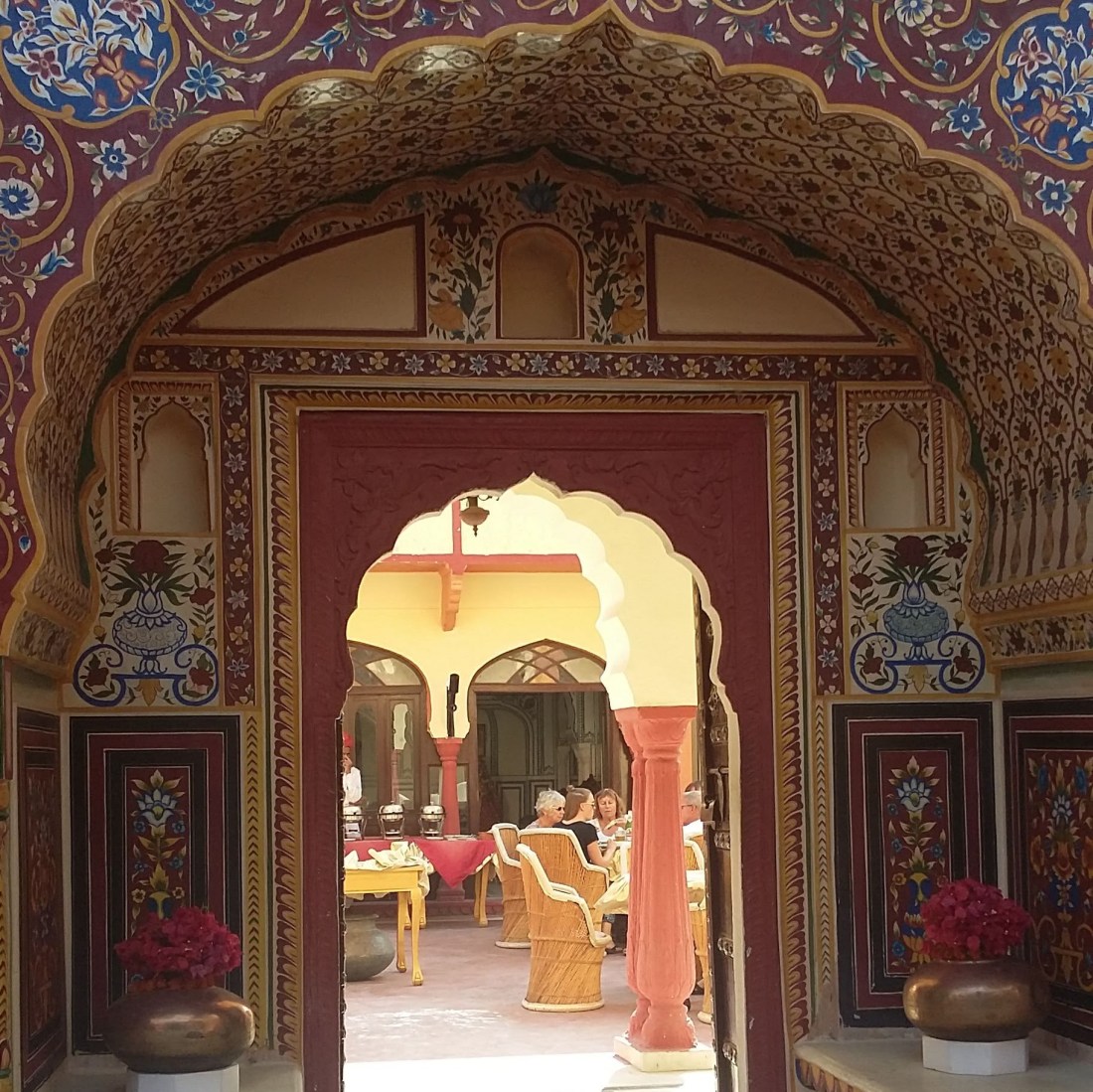
Its day 4 and after a hectic time in Delhi, Agra and the Taj Mahal we arrive at Fort Madhogarth, a heritage citadel set on a hill which is owned by the Maharajah of Rajasthan, aka….. ‘The Real Marigold Hotel’. At our disposal we have a very efficient manager, 3 men in dhotis and turbans cooking and serving our food and drink, an artist in residence and by the looks of the handful of droppings scattered under our bed, we may well have some rodent friends sharing our bedroom! Although the room is charming and has semi restored paintwork and original 5 foot sandalwood doors, we decide to sleep in our sleeping bag liner just in case our rodent friends have been nibbling the bedding!

There is a photo of Prince Charles and Lady Diana meeting the Maharajah in the narrow hall to our bedroom. In contrast our guide tells us that when the ramped entrance was built to the fort nearly 400 years ago, it was built in a curve to prevent the enemies elephants from charging the door…. its eccentric, but quaint and just a little bit magical. We go for a walk in the local village. The poverty of the people living in the village is a stark contrast to our home for the night, but the warmth of our welcome is extraordinary. The children are just arriving home from school and are keen to have their photo taken and look at them on our phones and cameras. There are smiles, hello’s, hand shakes and high fives. Some try to ask our names and proudly tell us theirs. There is a wedding going on in the village and the local band are waiting in the boogie bus… a brightly decorated truck with plenty horns and drums. The bride, dressed in her gold sari waves to us as she gets ready for the wedding and the wedding procession moves off ….. Indian drum and base goes on long into the night. We retire back to our castle for a gin and soda (no tonic to be had!) on the roof and watch the sun set before we are served dinner under the stars. The Real Marigold Hotel is working its magic on the 12 strangers who met 4 days ago in Dehli and we eat, drink and chat long into the night, everyone of us feeling just how lucky we are to be here.

Delhi……ordered chaos?

We start our first day of Intrepid’s ‘Classic Rajasthan’ trip by heading to the metro, walking along the side of the road from our hotel (nobody ever seems to walk on the pavement in Delhi) past cows munching on litter strewn across the landscape. The metro in contrast to the local neighbourhood appears to be modern, clean and relatively well organised. There’s a security check….. ladies to the right and men to the left, a swift body sweep and all bags trundle through the prehistoric x ray machine. This seems to happen a lot in India….. not only at airports, but also museums (even at the Gandhi museum) , monuments, mosques, temples and shopping centres. I can’t help but wonder how efficient these machines are, but also that there seem to be many more personnel needed for the task than perhaps is required! However I did see a book being confiscated at the Taj Mahal. Were the guards suspicious of it as a possible weapon or did they simply not approve of its content. We here of a grenade attack in a prayer hall in Amritsar and I think again about what I might have considered to be an overcautious approach to security in this country.

As we walk and pick up the taxis and rickshaws which help us to move across the streets of Delhi on our trip, there is chaos everywhere. Horns honk and vehicles weave across lanes which merge from 2 to 5 with no clear demarcations. Cars, people, motorbikes, cows and stray dogs intertwine in what appears to be a well rehearsed dance. There are no accidents, no raised fists or rude signs, just a toot and a friendly smile and everyone seems to end up where they want to be. Maybe after all this chaos is a bit more ordered than it first seems!

So we are here at last …. !?*#

After a week of packing up, moving out, packing and repacking for India and saying our final goodbyes to family and friends we are finally in Delhi… also known as New Delhi! By Wednesday afternoon we were both quiet hysterical with all that we have had to organise over the previous week. As we headed off on our great adventure we started to relax when we got in the taxi for Glasgow airport. After an initial wobble at the check in desk where we realised my Indian e visa had not been printed out as required, this was promptly dealt with and we were on our way. Our flights went smoothly and we managed to pick up a taxi at the airport to take us to our hotel in downtown Delhi.

The city is huge and many new experiences awakened our senses.  The traffic is absurd, with rickshaws, trucks, taxis, motorbikes and a sacred cow or two vying to be first in line. Horns blaring every second, vendors approaching stationary cars selling coconuts, spices and chai, all being served via the window of your car and washing strung out across roundabouts drying in the smog. A little further on in an area looking more than seedy two ‘women’ approach the car and give John the ‘glad eye’. The taxi driver explains that these ladies are half man, half women or ‘lady boys’. John is very glad that the taxi door is locked. He smiles back and shakes his head just the same!

And so we are here at last. Our hotel is basic but comfortable, the Indian films on TV are bizarre,  all the staff are just lovely,  and the food of course has been amazing……! We are  ready to start our travels, with no expectations, but with open hearts and minds. Let the adventure begin…….

Wherever I lay my hat…..

20181108_101944.jpg

The house is all packed up and most of our belongings will be in storage for the next 12 months. So from now on, in the words of a great 80’s Paul Young song “wherever I lay my hat.. that’s my home”. For the next week we will be camping at family and friends and I will be trying to whittle  my 40kg bag down to 20kg for the flight to Delhi next Wednesday.

Although I really shouldn’t complain, the last few days have been very stressful……. so many decisions to make! Do I keep the jar of cumin spice from 2003 or do I chuck, and amidst a 101 other decisions do I remember to recycle the glass jar! I’ve realised that making decisions under pressure certainly isn’t my forte, but perhaps this is something I can work on during my travels…..