Cycling around Battambang

img-20190128-wa0009

Most people come to Cambodia to visit the ancient temples of Siem Reap, but as always when travelling some of the most memorable experiences are those you stumble across rather than those you seek out. Our cycle around Battambang is one experience that I will treasure forever. After a long bus journey, we arrive in picturesque Battambang, in the northwest corner of the country. It’s a welcome respite after the horrors of the killing field and genocide museum and the buzz of Phnom Penh city. I’m looking forward to checking into The Classy Hotel. The breakfast is amazing and there’s a pool…. all’s good in the life of a ‘classy lady’!

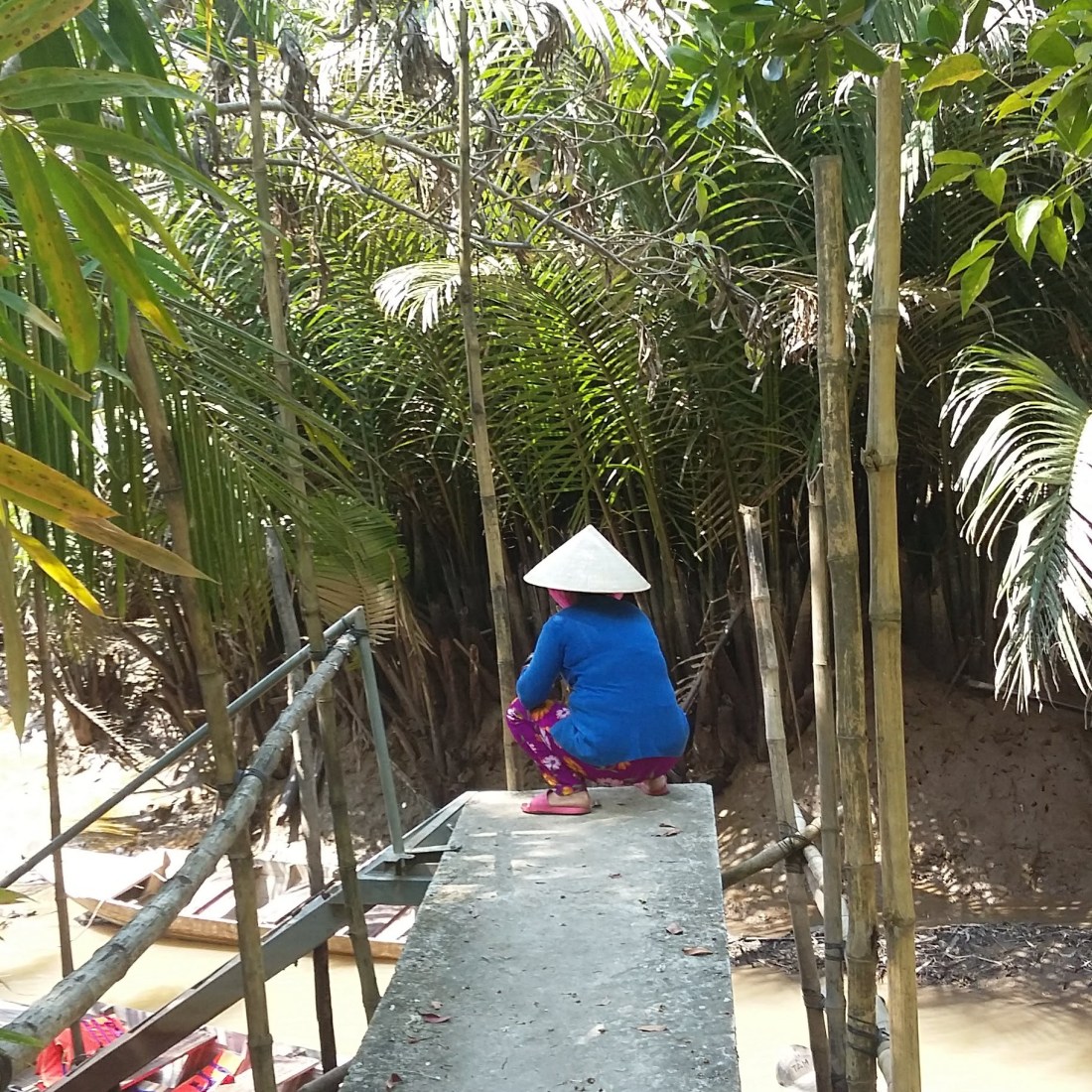
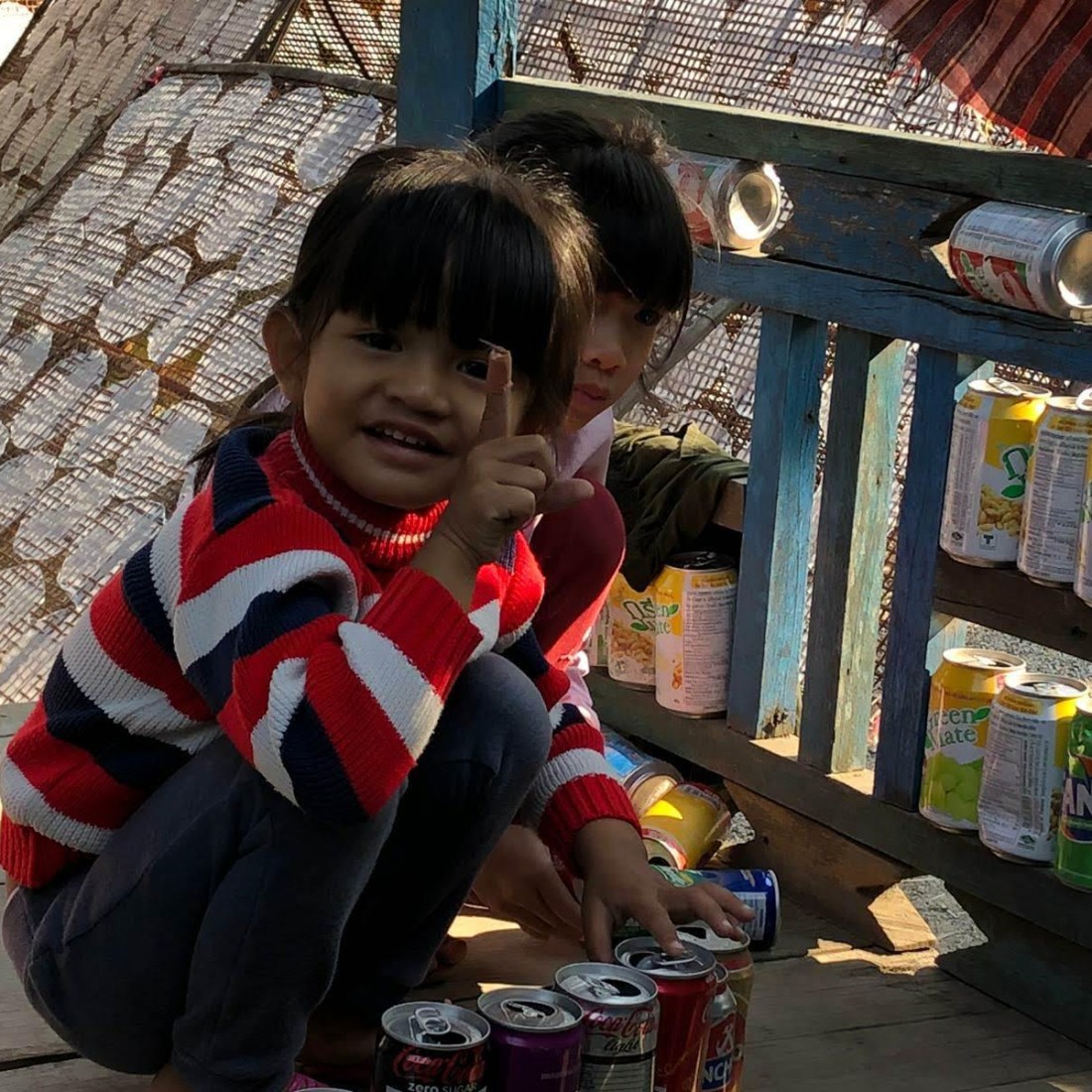
The following morning, the sun is shining, and we set off on a cycle tour in the  countryside, where we will also visit some local families. We are out of the city in minutes, cycling along country roads full of villagers going about their daily lives. It’s Sunday and the local children are playing, shouting hello and waving as they run beside our bikes with their happy smiling faces. It’s clear that the villagers have very little, but  accept the strange convoy of westerners wearing helmets and they too smile, clasp their hands together and bow, saying ‘Arun Suesday’ (Good morning). We stop at the homes of two families, one family is busy making rice paper, in the other  a women shows how she sun dries bananas over bamboo and collects rubber form a handful of trees on her land. The homes here are wooden and built on stilts which helps to prevent the flood waters in the rainy season from reaching their homes, and also serves as a useful work and family space which is cool in the hot season. Both families tell us how the years after the fall of Pol Pot’s regime were hard.  They returned to their homes in 1979 to find that there had been ‘a first come first serve’ policy with regards to property and land, and many families came back to find their home’s already occupied. Civil war with Vietnam continued for another 20 years and it was only in 1992 that the UN finally arrived in the country to help. Cambodian’s fought with each other for property and land, forcing many of them to look at alternative ways of surviving. Many died from starvation and disease Healthcare was in short supply after 90% of doctors in the country were executed during the Khmer Rouge’s regime.   The people we visit work hard, often 7 days a week just to keep their family fed, clothed and educated. I am humbled by the welcome they give us in their homes.

On our return to the city we visit a street vendor who makes and sells Kralan, bamboo sticky rice cake. Small bamboo sections are stuffed with sticky rice, red beans, grated coconut and coconut milk and then slowly roasted over a charcoal fire. The blackened outer bamboo casing is trimmed off and the bamboo layers are peeled away to reveal a tasty afternoon snack. I must admit it is delicious. I have loved this morning. I’ve always enjoyed cycling, one becomes part of the countryside in a way that walking or using a motorised vehicle doesn’t and I think any future visits to this country will definitely  include travelling by bicycle.
img-20190130-wa0030

Charming Kampochea: the dark years

20190124_104937-1.jpg

We travel by bus across the border into the Kingdom of Cambodia, known as Kamphochea by the Cambodian (Khmer) people. There are subtle differences here compared to neighbouring Vietnam … the roads are quieter and less developed, the land is flatter, drier and vast paddy fields stretch as far as the eye can see. Cambodia is a country of around 16 million and 80% of its people are farmers. The central plains are known as its rice bowel and it exports rice to more than 60 counties around the world. There are no more Non-Bai Tho (conical) hats and I can see fragments of southern India in the faces of the people and in its ancient temples. The charming bow with hands together for hello, goodbye and thank you, is back! Our new guide tells us that around 95% are Buddhists in the country, but in the past great Khmer empire, formally known as Funan had one of the oldest regional Hindu cultures and was a significant maritime trading partner in the Indosphere.

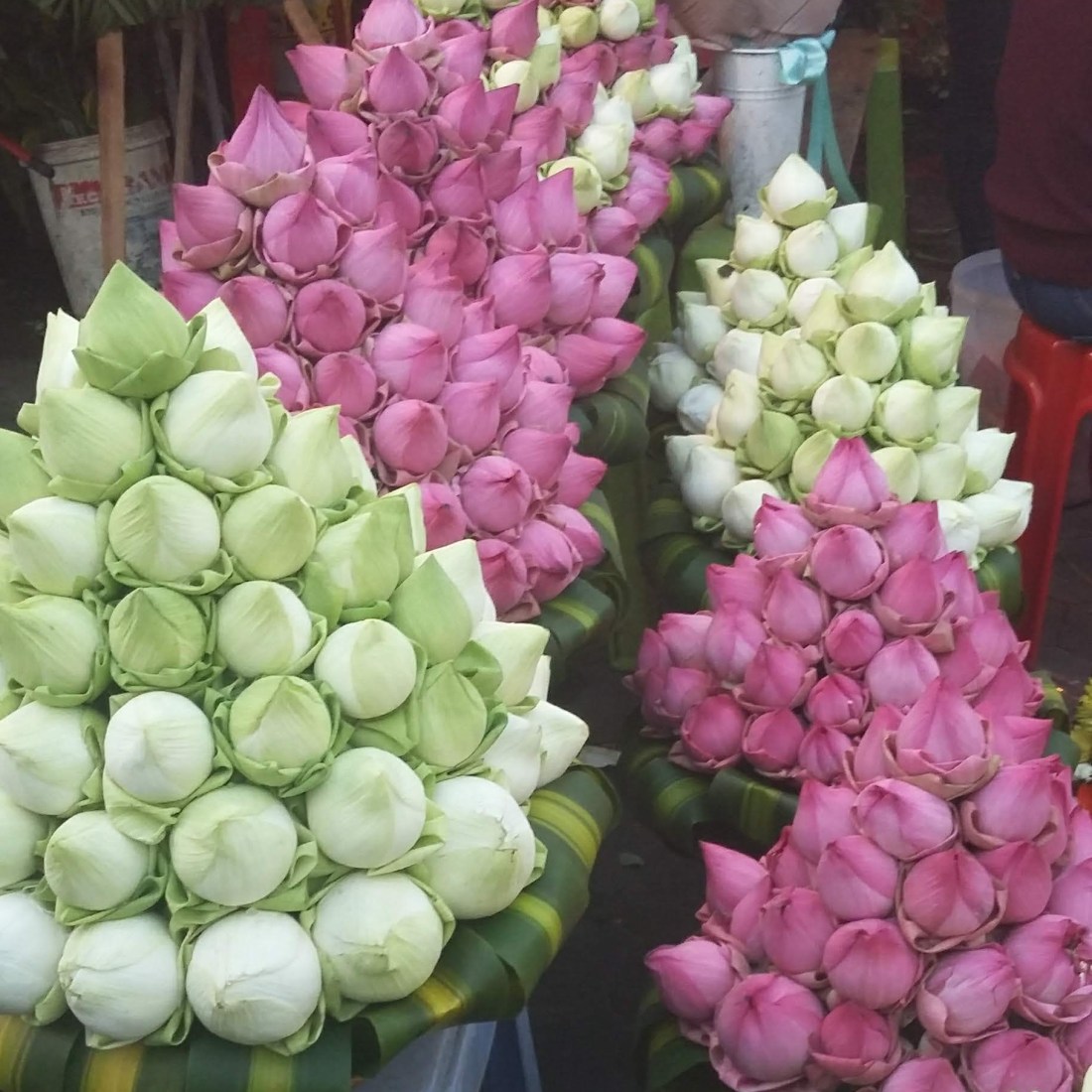
Our first destination is Phnom Penh or ‘Penom Ping’ as our guide likes to say. We head out on a tuk-tuk tour of the city before dusk settles, and a real surprise awaits. Although this is a much smaller city than those, we visited in Vietnam there is lots of development here. It is an interesting blend of the old and the new. In the heart of the city an Angkorian style tower, signifies Cambodia’s Independence from the French in 1953. On the other side of this imposing tower sits the equally impressive Norodom Sihanouk Memorial, a 4.5-meter bronze statue housed under a 27-meter-high stupa of gold and white of the beloved former King. Modern neon lights shine out around these monuments making this park quite a spectacle. Next, we visit the street food market and there are some similarities with its neighbouring country, Laos. This time its BBQed rat, not dried, deep fried tarantula and snake, chicken feet and heads and frogs’ legs and snails by the plenty. Our guide advices us against eating this food which has often been cooked days before and left out on the stalls until sold. Our delicate western digestion would need some toughening up before we could avoid several hours on the toilet! We pass the flower market full of amazing smells and exotic flowers and the fruit and vegetable market: we try some Rambutans and Longan fruit, and sniff the infamous tasty but stinky durian, which is often banned in hotels. I feel there is a buzz about this city and that things are changing here fast…., it would be interesting to visit again in a few years.

This city has a dark past and the next day we visit the Killing fields and the Genocide Museum, which was initially a high school and was transformed into a prison camp in the city during the Pol Pot regime from 1975-1979. As a child in the 70s I remember nothing of this tragedy, but I do remember the discovery of mass graves in the early 80s of what we now call the Killing fields. When Pol Pot came into power in 1975 which he declared as ‘year zero’, everyone was evacuated from the cities and forced them to live in the countryside, to work and live as communal farmers. He abolished education and health care and people were allowed only a few personal possessions. Communal kitchens fed the masses on very little. The ‘lucky’ people were forced to work long gruelling hours in the fields, but 1.7 million were rounded up, tortured and met their final death in the killing fields. Pol Pot embarked on a brutal campaign of social cleansing and anyone who had worked for the previous government/army and the educated middle class; doctors, lawyers, teachers, journalists, foreigners and even those wearing glasses, were sought out and eliminated in order to create a pure self-sufficient peasant society. This is not a visit I have been looking forward to and to be confronted with the dark side of what humans are capable of, is harrowing and fills me with sadness. A monument to the 20,000 men, women, children and babies who were systematically murdered by the Khmer Rouge soldiers at this killing field just a few miles outside the city, sits in the centre. The white stupor contains 9,000 skulls of the victims. I can’t bring myself to go in, but slowly walk round trying to comprehend what has happened here and paying my respect to the victims. Did they know that they were coming here to die? How could the soldiers beat their own people to death? We learn that the soldiers were often very young and threatened with torture and death of both themselves and their families if they didn’t do their job. One of the mass graves we visit at the field contains the bodies of hundreds of soldiers, murdered by their own comrades. Despite the great sadness here, it is peaceful, and visitors are quiet and reflective. The birds are singing and the chatter from the local children playing at a school nearby drift across the scene…life goes on despite the horrors which happened here.

Next, we visit the Genocide museum where the prisoners were initially brought. They were photographed, weighed and measured before being systematically tortured until a confession was made. True or false, the soldiers didn’t care. If they didn’t get a confession from their prisoner, they too would be killed.  Prisoners usually stayed for 2-3 weeks where they were chained and blindfolded in individual tiny brick or wooden (for the women) cells with an ammunition box for a toilet. No one escaped from either the prison camp or the killing fields, although 7 men and 4 children who were still prisoners at the time of the fall of the Khmer Rouge in 1979 survived to tell their stories of their time in Tuol Sleng prison. Two of the men who survived, now 87 and 79 visit the museum regularly to talk to visitors about their experience. I buy a book from one of them, Chum Mey, a mechanic who lived in the prison for months because he was useful to the regime, he repaired typewriters and sewing machines.

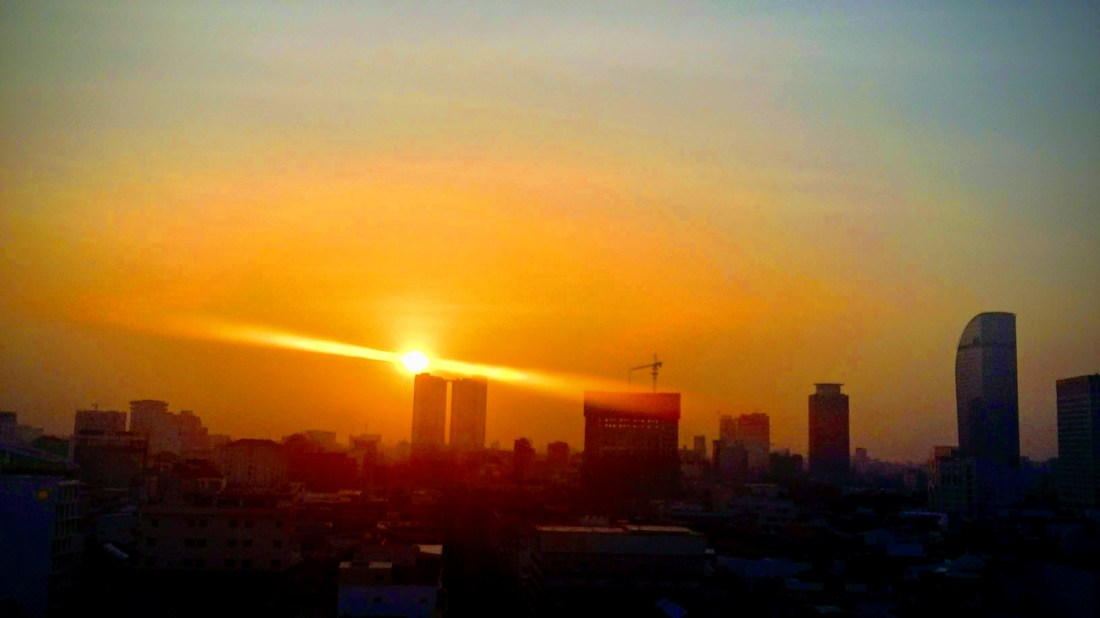
This has been a difficult day and I can’t begin to imagine what it was like for the Khmer people who were subjected to Pol Pot’s regime. The images from the killing fields and the prison camp will stay with me forever, and because I have been here, I feel that I too have a responsibility to share this story with others, in the hope that we can learn so that nothing like this can ever happen again. In the evening we meet Johns nephew and his partner who are living and working in Phnom Penh. We sip our drinks and watch the sun set over the skyscrapers and I push the images from today away for now but hope that the lessons from Cambodia’s darkest past will guide the future on mankind.

20190125_103743-effects-1


The American war

20190122_042228

We are sitting on the Giantibis bus (no idea why it’s called that) travelling out of Vietnam into Cambodia and there is one final story still to tell…. that of the Vietnam war, also known as the American war by the Vietnamese people. During our time in Vietnam we have visited many places which still bear the scars, listened to the people’s different stories and perspectives and tried to understand more about what happened and the implications of the war for the country and its people today.

Before visiting Vietnam, I knew a little about the war from 1964 to 75 between North Vietnam and South Vietnam who were backed by the USA. Conflict leading up to this period however simmered in the country for decades before. The USA first became involved in the late 40’s when they came to the aid of the French, who had colonised Vietnam since 1887. Following the invasion and subsequent withdrawal of Japan after world war II and the declaration of independence of North Vietnam by Ho Chi Minh, the French struggled to regain power in the country. By the early 1950’s both China and Soviet Union supported North Vietnam and the French troops were defeated and finally withdrew from the country in 1954. US concerns about the ‘domino affect’ of communism dominated politics at that time and led to their backing of the catholic nationalist leader of South Vietnam. We learn in the Ho Chi Minh war museum that 58, 000 American and 1.3 million Vietnamese soldiers (on both sides) were killed in the 9 years of the war and a staggering 2 million civilians died as a result of the conflict. In addition to dropping Napalm and cluster bombs, the USA sprayed Agent Orange, an herbicide, thick with the harmful contaminant dioxin, over 3 million hectares of jungle and farmland. The main aim was to defoliate vegetation which had provided cover for the illusive Viet Cong soldiers. Up to 4 million people (including USA army personnel) were exposed. Unfortunately, not just those exposed at the time were affected and we now know that the chemical is capable of damaging genes, resulting in deformities in the 2nd, 3rd and 4th generations of the exposed victim’s family. Still-births and deformities such as cleft palate, limb loss, mental retardation and neural tube defects, serious skin diseases and several cancers have all been linked to Agent Orange. In 2004 the USA government was prosecuted to gain compensation for the Vietnamese victims of Agent Orange, however the case was dismissed due to ‘lack of evidence’, despite USA government having already provided compensation to US veterans and their families. The legal battle for justice continues to this day.

In Ho Chi Minh war museum, where graphic photographs detail the horrific events of the war, the victims of agent orange and their continued struggles. On our second day in the city we visit the Cu Chi tunnels and marvel at how the Viet Cong army lived, fought and finally won the war. Soldiers used these underground routes which went on for miles to house troops, transport communications and supplies, lay booby traps and mount surprise attacks, after which they could disappear underground to safety. With an underground city to penetrate I now understand how USA troops were never going to defeat the Viet Cong.

On our journey back from Hanoi, we visit a centre supporting all generations affected by Agent Orange by training the people in local handicrafts, offering valued employment, regular income and hope for the future. It is a hive of activity and dozens of young disabled people are working on the most amazing embroidery paintings and jewellery products. We buy a painting designed and stitched by a young girl called Chau, and when we are back from our travels it will hang on the wall, holding poignant memories of this beautiful country, its past struggles and hopes for the future.

There are always many perspectives and the American war is no different. For the USA it was a fight against communism. For the Vietnamese people, who had been occupied for more than a thousand years first by the Chinese, French and Japanese, the American war was a fight for independence and a chance to govern their own country. The American people were outraged at the devastation and violence of the war and because of its lack of clear objectives. For Ho Chi Minh, the leader of North Vietnamese Communist party, his story too is thought-provoking. Our guide tells us that he first approached the French and USA to support his fight for independence, however they refused, and he turned to communist China and USSR who were happy to help. One wonders if the USA had supported Ho Chi Minh, whether the war would have happened at all. And finally, there is the plight of the 2 million South Vietnamese who fled their country for fear of persecution after the war ended in 1975 when the North and South were reunified. Some opponents of the new regime were also sent to re-education camps and international outcry ensued.

In Hue we visit a local couple in their home and share a delicious home cooked meal. The husband, a former North Vietnamese army officer still bears the shrapnel scars of the war and his wife, who was a nurse during the war years, tells of tending to the injured soldiers. For their service to the country, the government has gifted them this home in Hue. We speak to them about the war, and they say that many people suffered on both sides, that the past is the past and that we must all live for the present and have hope for the future.

On our final day in Vietnam, we head out of manic Hoi Chi Minh city, formally known as Saigon,  past the 8 million motorcyclists and the street vendors with their lucky cats and brightly coloured piggy banks stacked up for the upcoming Lunar New year celebrations, I reflect on our stay here. I truly believe that despite some of its current difficulties Vietnam wants to forget its past, has hope for the future and that there is now a determination to move forward in the 21st century in peace….and I wish them all the luck in the world.

20190118_071317-1.jpg

Hue to Hoi An: do all cities in Vietnam begin with an H?


20190119_031505-EFFECTS

Another overnight train journey and we arrive in Hue. All went well until early morning, when a little mouse popped his out from under our berths and made the ladies in our cabin shriek. He promptly ran off and I think he was probably more scared of us than we were of him. Heu, pronounced ‘whey’ is the ancient capital of Vietnam and I’m looking forward to visiting the Imperial Citadel complex. Our guide tells us that it often rains here, but the people are hardy. It’s one of those days today and the rain is torrential. Motorcyclists have extra big plastic macs draped over themselves and their bikes, with a clear section for the headlights. Others sit on the side streets under make shift rain canopies trying to sell their wares in the dripping rain. I grab a bright green plastic mac for 20,000 dong (about 60 pence) and we head out for the day.

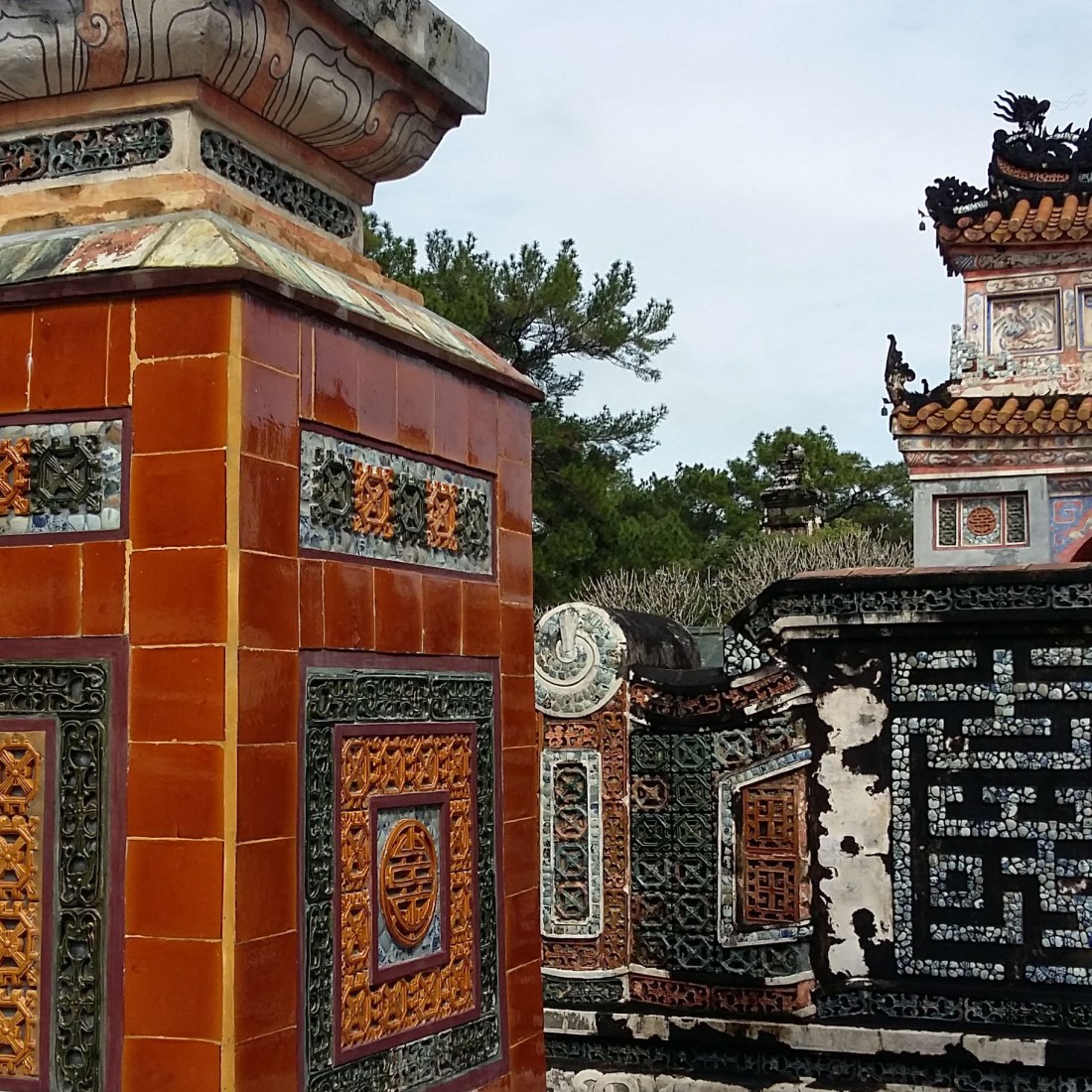
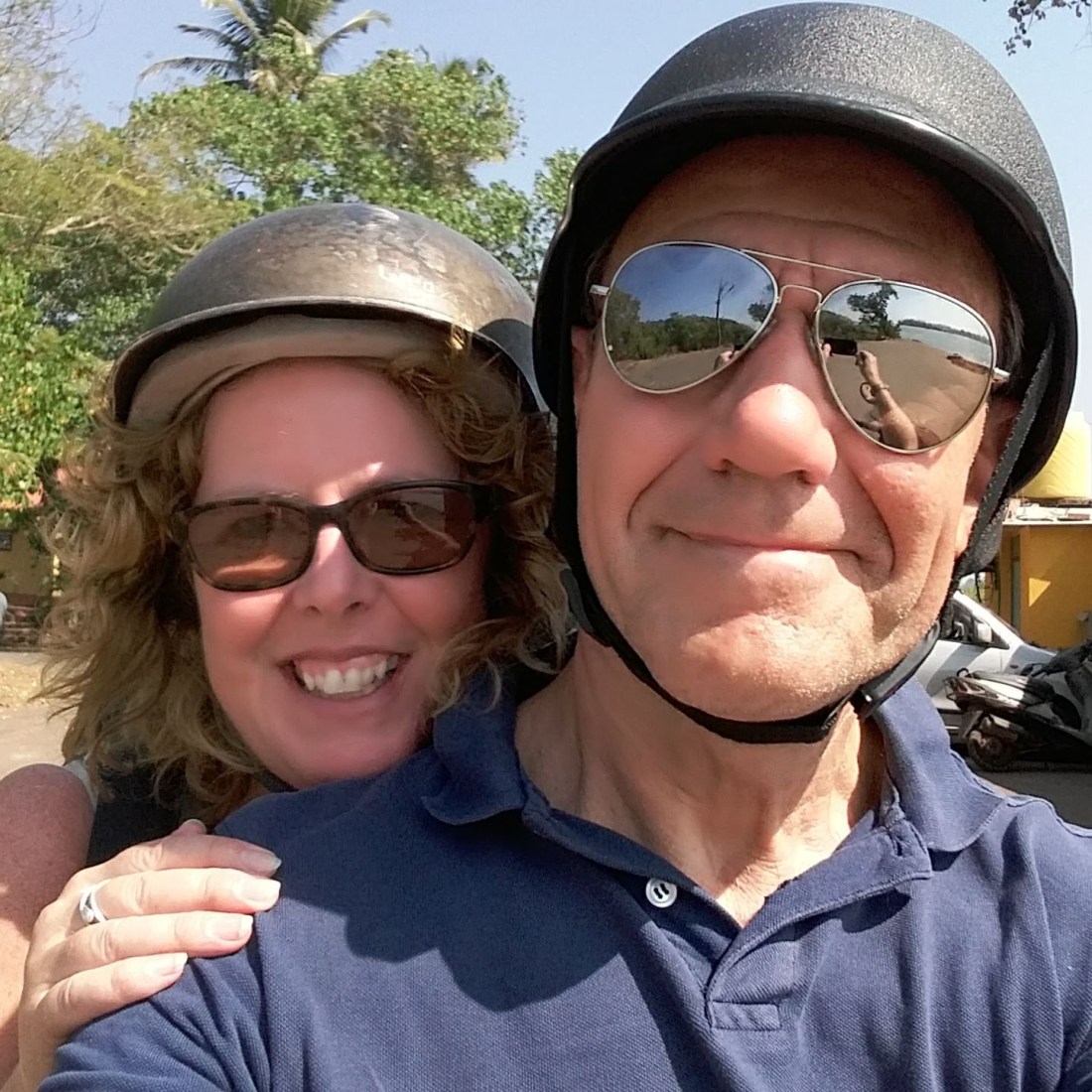
The imperial city has a distinctly Chinese feel in its architecture and gardens (lots of bonsai’s) and I can’t help but feel that it would look even more stunning if it wasn’t raining so heavily. We learn about the history of the last 13 Nguyễn emperors of Vietnam and visit their palace. The rain is relentless and we start to trudge back to the bus. Some of our group, including John opt for a ‘cyclo tour’. The ‘cyclo’ looks like a giant pram which is propelled by a bike and although it looks drier, I’m not sure how much John is going to see from the top of the rain cover! The next day we have a motorbike tour. We head off as a group on the back of bikes with our matching helmets and snazzy raincoats and we zip around the city. We learn more about the history of the emperors, visit the fake tomb of emperor number 4 (It’s a long story!) and the Tien Mu pagoda. Constructed in 1844 each of its seven storeys is dedicated to a manushi-buddha (a Buddha that appeared in human form). We have a simple and delicious vegetarian lunch in the grounds of the pagoda.

The following day we are on the bus again and after a brief visit to one of the pearl farms along this stunning coast of Vietnam, we arrive in beautiful Hoi An, recently declared a world heritage site. The sun is out and after a brief orientation walk, we have some free time to explore the town, a shopping mecca, famous for its tailors, leather making and jewellery. We spend a leisurely evening strolling along the narrow alleyways by the river, the colourful lanterns add to the celebratory atmosphere. The next day we head to the beach for a day of chilling. We walk back through the rice fields and the backstreets where many of the locals go about their daily life. ‘Sin Chow’ we say as we walk past. By the end of our time in Hoi An, after a bowl of Pho Ba, a 2-1 win for Vietnam in the Asia cup (the first time they have ever reached the quarter finals), and an amazing Pho Ba (beef noodle soup, with plenty of fresh herbs and spice), I feel warmed, rested and ready for our last few days in Vietnam.


Good morning Vietnam

20190115_065835

After a short flight we arrive in Hanoi, the capital city of Vietnam, home to 8 million people and 4 million motorbikes. We are back to mad traffic, and the bikes constantly crisscross the busy streets. There’s some horn tooting, but it’s still nowhere near as manic as the cities of India we’ve visited, and almost everyone here is wearing a helmet. After our group meeting, we go out for dinner and our guide recommends a Vietnamese sharing meal, which is a bit like an Asian tapas…. there’s a little bit of everything to try. This is a country I have been keen to visit for some time, particularly for the food and our meal is absolutely delicious.

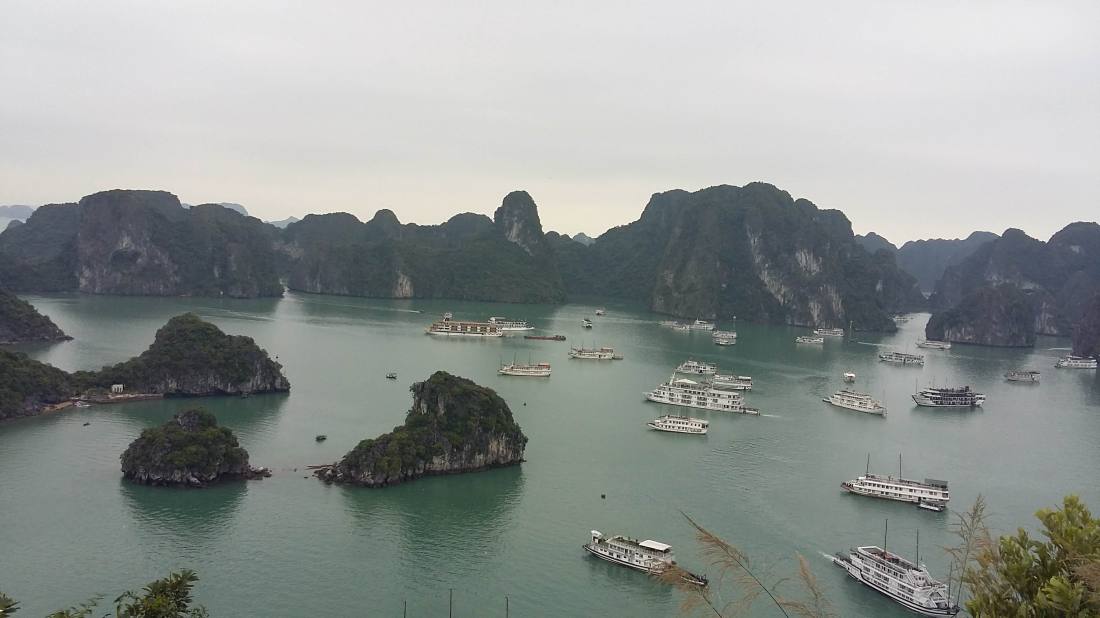
The next morning, we are off to Halong Bay, also known as the bay of the descending dragon, where over 2000 spectacular limestone islands, formed by geological processes taking billions of years are scattered across this sweeping cove. I remember this as the back drop for several the scenes from the James Bond movie, Tomorrow never dies, and it has been recommended by several friends who had previously visited here as a ‘must visit’ in North Vietnam. We board our small boat and head off, for an overnight cruise in the stunning bay. Legend has it that many thousands of years ago the Jade Emperor sent the Mother Dragon and her children to help ward off invaders from the North. A family of dragons were called upon to help. With the help from the dragons the battle was won, and Vietnam was at peace again. The emeralds which were spat from their fiery breath formed the islands and islets, protecting the land from a further sea invasion and which is now a spectacular feature of the bay. Rain has been forecast and it’s often dull and foggy here, but we’re lucky today as the sun is out. As we stand on the top deck marvelling at the scenery which surrounds us, there is a gentle breeze is blowing in our hair and we are smiling. The sea is a milky aqua and the sky is blue. The huge limestone rock formations stretch upwards from the waters and are covered in ferns and small trees. Over the next 2 days we swim, kayak into hidden lagoons, visit islands with amazing caves, take part in traditional Vietnamese karaoke and eat…. oh boy, do we eat. There are noodle soups, deep-fried rolls, gorgeous cabbage dishes (I can’t believe I’m describing cabbage as gorgeous), jumbo prawn, squid, oysters (the first I’ve ever had), pork wrapped in tofu, fishcakes, chicken and ginger and many, many more. I’m in heaven…. I think I’m going to like it here! Later when we are in Hoi An, I do a cooking class, and I am so looking forward to trying out my new recipes when I get home; deep-fried rolls, chicken banana blossom salad, Pho bo and don’t forget Mango sticky rice with a Malibu coconut sauce.

We finish off the evening with a Karaoke, our guide is enthusiastic, but it takes a few Halong beers for our group to warm to the idea. Its not long before we are in our stride, the girls singing ‘Mama Mia’, and ‘Dancing queen’ and as the night draws to a close the 4 men in our group give us their rendition of ‘It’s now or never’ which floats into the night sky across the bay. Later as we settle into our cabin with the hum of the generator in the background, I think about the song and how as travellers we are here experiencing ‘the now’ because after all one never knows when ‘the now’ might become ‘never’.

20190116_014223

La kone Lao

20190110_042832

Our first day in Luang Brabang, and its dull, and rain is threatening. We walk around the town and there is a French/Canadian feel here. There are many bakeries selling pastries and cakes and the houses have intricately carved teak doors and shutters. Trees and craft shops selling beautiful embroidered and woven goods line the street. We pass a small shop by the river with some interesting glass flagons sitting out-front, filled with strange creatures and a golden liquid. An old man with pink hair sits on a stool, “buy my whiskey and you can look like me” and he proudly tells us that he is 82. It is home-made whisky decanted into vats filled with venomous snakes and scorpions… 10,000 kip for a shot, with a different kind of kick! Our guide strongly advises not to drink, as the venom still remains.

We visit the Laos ethnic and cultural centre and learn more about this country’s diverse inhabitants. Laos is a landlocked country of 6.5 million which borders 5 countries. Its outline looks a lot like a banana tree. There are 4 main ethnic groups, with around 40 sub-groups and 80 different spoken languages. It is a country rich and diverse in its culture. The original inhabitants of Laos are the Austroasiatic ethnic group, although the most populous group are the Tai Kadai people who are descendants of speakers of the Tai language.  Two smaller groups also inhabit Laos; Sino-Tibetan originating from Tibet and Burma, and the Hmong people whose homeland was China. Around 67% of the people are Buddhists, however animism and shamanism is followed by the Mhong people. In animism they believe in the spirit world and that all living things are interconnected. The human body is thought to be a host for many souls, and the shaman (medicine man) serves as a medium between the spirit and physical world. Our guide tells us that just like many other parts of the world, the traditional way of life for the Lao people is changing and the centre is hoping to educate and support the next generation to continue with some of the traditional handicrafts and music of their ancestors. Later as we visit the night market of Luang Brabang, I’m impressed with the local handicrafts and I buy a beautiful embroidered table runner which will remind me of this country.

The next day we get up early (5am) for the almsgiving of the Monks. This tradition of Theravada Buddhism dates to the 14th century. Still today locals wake early to prepare food for the monks and wait quietly by the roadside to give their gifts. Before sunrise, following morning meditation, around 200 Buddhist monks depart from the temple to gather food for their daily meal. We sit with our shoes off and a small basket of sticky rice in our laps. As the monk’s pass, we place a small ball of rice in each of their bowls. This ritual cement’s the symbiotic relationship between the monks who are fed and the almsgivers who ‘make merit’ and thus receive spiritual redemption. It’s still dark and it’s a silent, sombre occasion; the saffron robes of the monks are shinning in the gloom. As the walk past there are no smiles and I wonder what the monks really think and feel about what we would consider in the West as an ‘act of charity’.

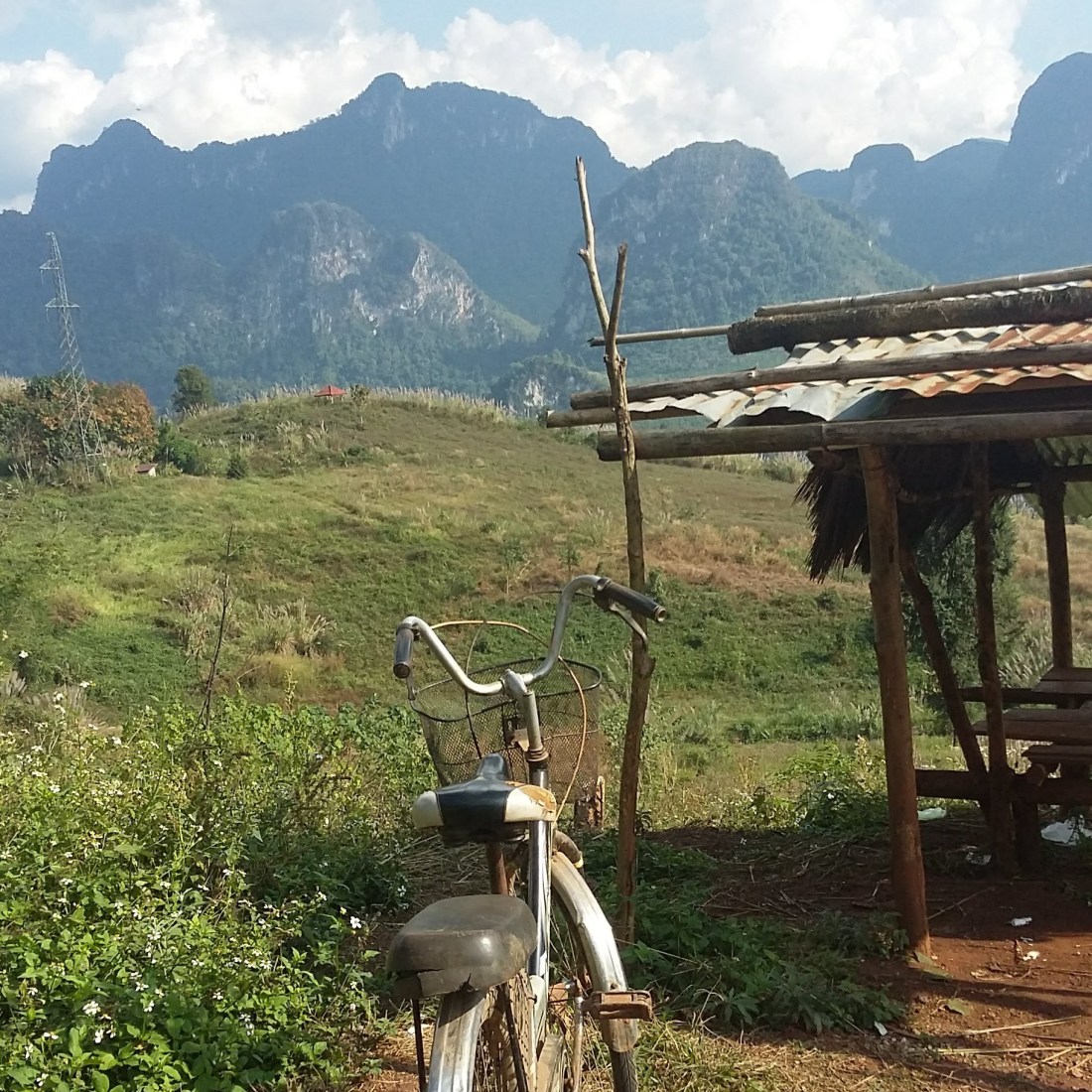
The next day we travel through the mountains of Laos, first visiting Vang Vieng and then on to the capital, Vientiane. This is the worst road I have ever travelled on and it makes for an interesting journey, but the scenery is stunning, and the blue sky and green mountains surround us. Apart from it being very winding, it is full of huge pot holes and there are large sections of road which is just rubble. Our guide tells us that the road was washed away by heavy rains in October and the government is making no attempt to fix it. In addition, many Chinese trucks trundle along the road, not helping the situation. The Chinese are building a high-speed train from China to Vientiane, which will eventually reach Singapore. There are many Chinese signs along the road, and I can’t help but wonder what impact of this railway line will have on Laos and its people.

20190111_075147.jpg

In our last day in Laos and we visit the COPE rehabilitation centre in Vientiane. Before visiting this country, I hadn’t realised was how much it had been affected by the Vietnam war. It remains the most bombed country per capita in the world, had 4 USA airbases,  and over 80 million cluster bombs were dropped here during the 9-year conflict. Millions of unexploded bombs remain, often in farmland and despite the efforts of bomb disposal teams, around 20,000 people have been killed or injured since the end of the war. As we leave Laos, I reflect on the countries struggles over the centuries, the beauty of the countryside, the diverse culture, traditions and food of its people and their resilience to survive and my hopes for them to continue to thrive for centuries to come. So, for now its “la kone Lao, khop tchaï laï laï”……. hope to see you again soon.

Lunch on the Mekong: turn away now all vegetarians!

IMG-20190107-WA0004.jpg

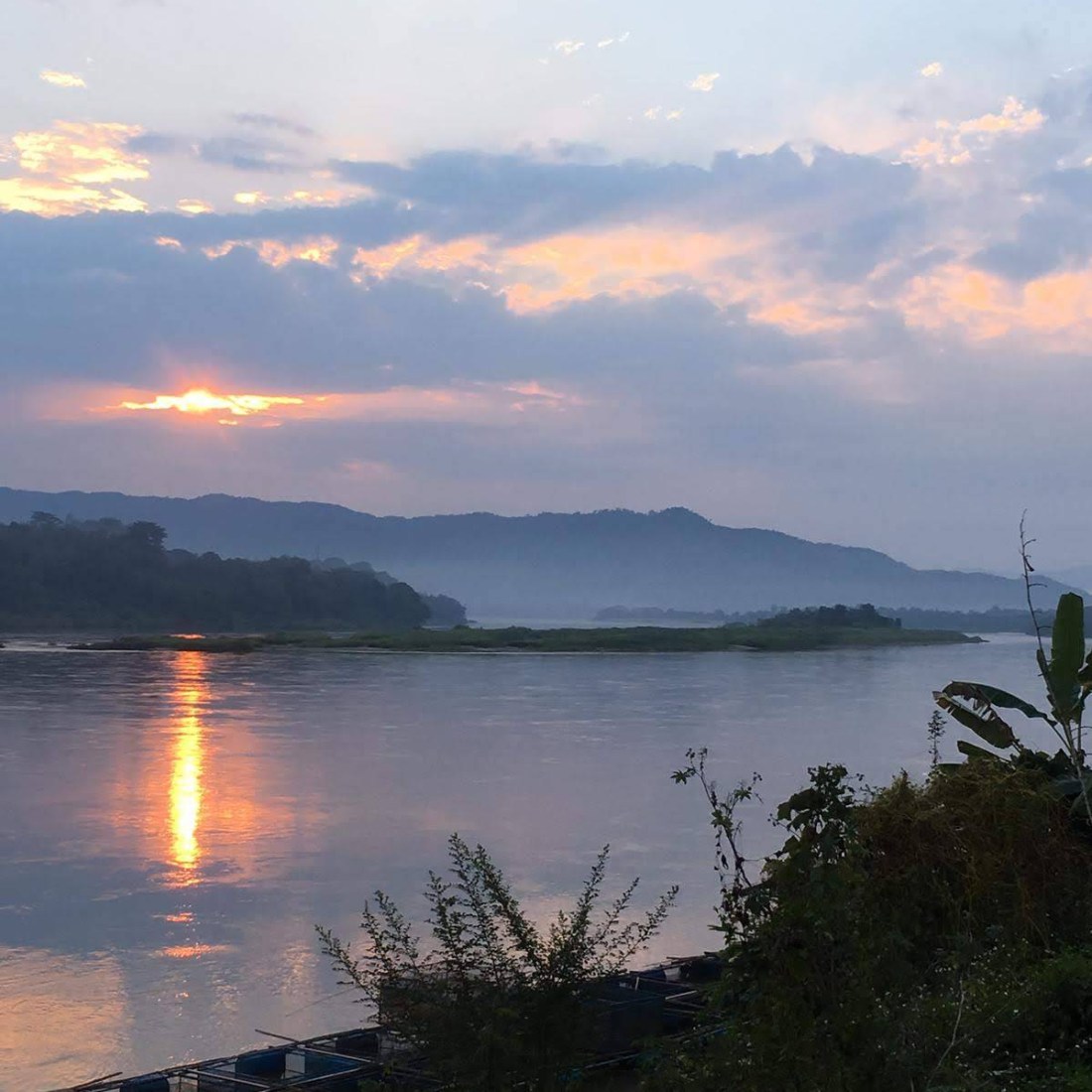
After a leisurely breakfast overlooking the Mekong river, we have a short bus trip to cross the border from Thailand into Laos, which is on the other side. We board a river boat which will cruise the 313 km down the Mekong to Luang Prabang, the former royal capital of Laos. I’ve not been feeling well, and I think the next 2 days will be just the best way to speed up my recovery. Day one and we meet our guide from Laos, Sak who gives us a brief history and an insight into the diverse cultures of this beautiful country. Laos first became a country in the 14th century and was then split into 3 kingdoms under Siamese rule. It was a French protectorate in 1893, eventually becoming independent in 1953. In 1975 Laos became Laos, PDR (people’s democratic republic) and has since remained a communist state with a thriving tourist industry and liberal market economy.

Day one and we drift along the river, reading, chatting, drinking tea and coffee, eating baby bananas and lying across the cushions at the front of the boat. The river is surprisingly fast flowing and is full of eddy currents. The milky brown water swirls in both clockwise and anticlockwise directions and our captain is skilful in negotiating the river’s deep hypnotic waters. Every now and then a wooden speed boat zips past taking its passengers from village to village, the easiest way to travel in this remote part of Laos. The banks of the river are steep and piled high with golden sand. The villagers grow vegetables along the fertile banks, children play in the water and basic wooden fishing rods are fixed on rocks along the riverbank waiting to catch a Mekong cat fish. Further back, the forest is lush green with banana, coconut and teak trees rising into the conical hills beyond. We help to make banana fritters for lunch and Natthachai cooks some river weed, seasoned with sesame, garlic and tomato, as a snack, and it tastes a bit like chewy seaweed. The captain’s wife cooks a lovely lunch of yellow chicken curry, stir fried vegetables, spicy pork meatballs and boiled rice. We arrive late afternoon in the remote Laos village of Pak Beng and Sak takes us to visit the local market. As we walk along the village street the smells of BBQ’d sausages, chicken, whole fish and pigs’ intestine (a local delicacy!) drift into the evening sky. At the market, next to the brightly coloured fresh vegetables, there are more surprises… dried rat and squirrel, live frogs (to be boiled later for dinner), fried crickets and water buffalo skin (which includes the hair) and legs. I’m so glad that our lunch was prepared without any of these ingredients which are making my stomach churn. But as I think more about what I am seeing, I wonder about the differences between local Laos cuisine and what we would buy in our own  supermarkets. Everything here is fresh, its locally sourced and not commercially farmed, and provides a rich and diverse diet. In contrast the food we buy has often travelled many thousands of miles to be on our shelves, is produced using pesticides and animals are farmed in cramped conditions. So, although I’m feeling just a little squeamish about the possibility of this fair being presented for tomorrows lunch, it has certainly given me food for thought!

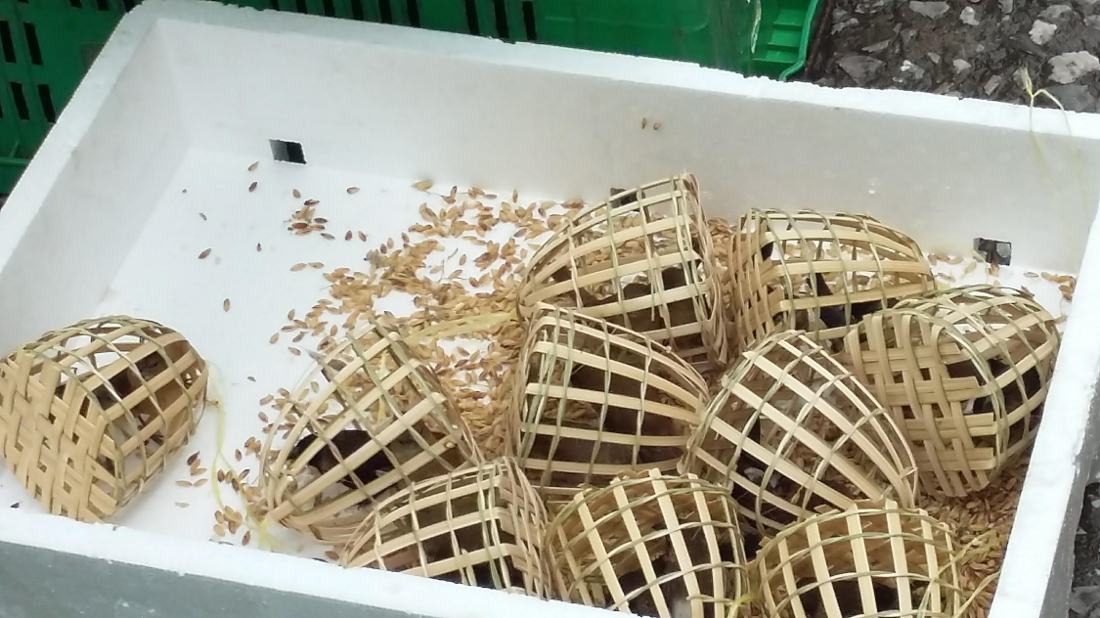
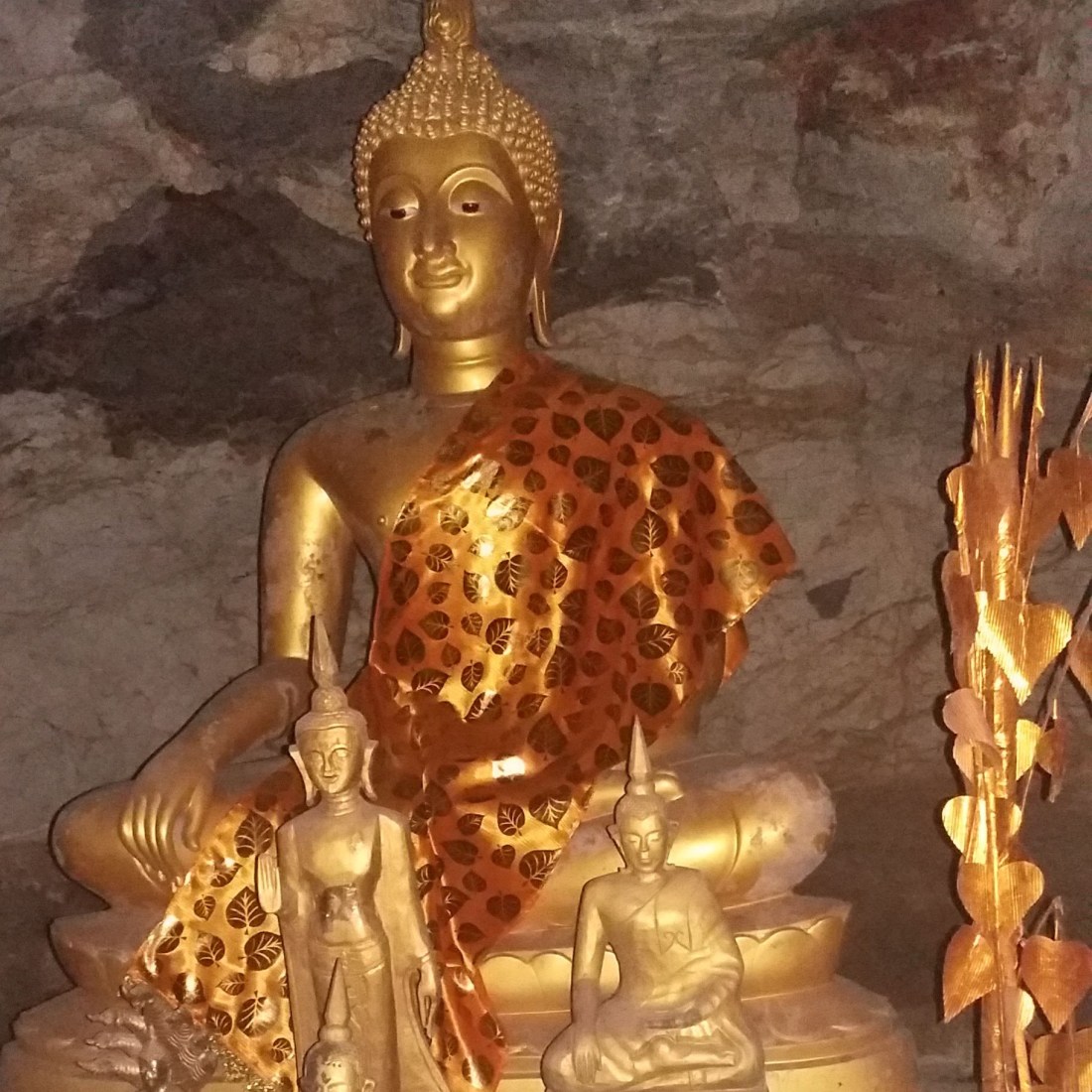
The next morning breakfast is not included as our chef at our local guest house has gone to school. I grab a cup of Lipton’s tea (the standard fair in Laos) and banana muffin at a small restaurant on our way to the boat and I wonder about how the local cuisine here will be influenced in the future by the tourists and backpackers who continue to visit this area. It’s been raining overnight, and the day is overcast… the tail end of storm Pabuk which hit southern Thailand some 4 days ago has caught up with us. We board the boat and wrap blankets around our shoulders to keep warm in the morning gloom. After another lovely lunch (not a dried rat in sight!) we stop at Pak Ou Caves, 2 sacred ancient caverns, first used as a temple by the Laos royal family. The caves are full of thousands of gold Buddha statues, brought by devoted villagers and travellers over the centuries. At the entrance, some Laos ladies are selling birds in small bamboo cages. Legend has it that a young man fell ill and desperate for a cure, his wife visited a local Buddhist temple where a monk instructed her to release birds, to prolong his life. The man recovered and led a long healthy life and this practice has continued throughout South East Asia, particularly in areas near a temple and at the New Year.  The idea is that if we buy and then release the birds that this will bring us a long and lucky life.

When we arrive later in Luang Brubang and visit the ATM to get some local currency. The exchange rate is extreme; 10,000 Lao kip equals £1, so for the first time in our lives we are millionaires… we are so lucky and I can assure you that no birds were released during this transaction!

20190109_02131120190108_073851.jpg


A morning with the elephants


20190105_033211-1

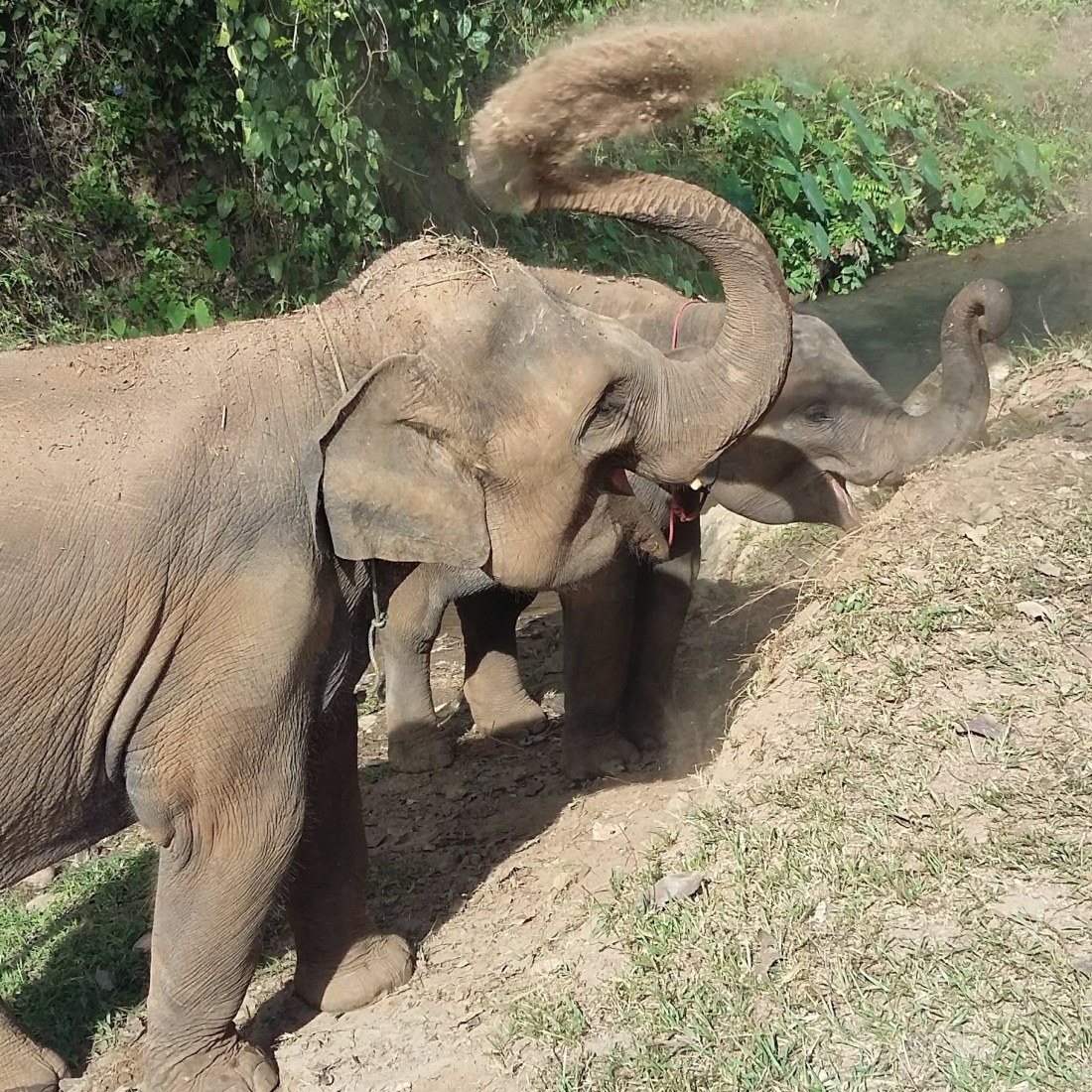
Five of our group spend a morning at the BMP elephant care centre, near Chang Mai.  We arrive just before banana breakfast time for the 4 gorgeous residents; Full Moon, who is 20 and 11 months pregnant, Tip whose 6, Mali, the naughty one who is 5 and Kaew Kalong who is only 3. All the elephants here have been ‘re-homed’ and the centre pays their owners rent so the elephants can stay at there. These elephants were previously working in the elephant entertainment industry either as a circus animal or in the elephant riding camps. This has been the fate of most of the domesticated elephants of Thailand, of which there are around 3,000 after they were no longer needed for transportation or to work in the farms and villages. The conditions for elephants in the riding centres are not good and the BMP care centre is trying to provide an alternative which allows tourists to observe these amazing animals in their natural habitat and to learn how to care for them.  We change into our elephant care tops and trousers and walk through the camp to meet them. We are equipped with our banana bags which are full to the brim with baby bananas.  We have been warned……elephants LOVE bananas. We need to be quick and have one ready in each hand. ‘Don’t bend down to pick any you’ve dropped’ and ‘raise both hands when you are done’, otherwise they will keep coming, looking for more! They are very adept at plucking the bananas from our hands with their trunks, before squishing a few at a time into their mouths.

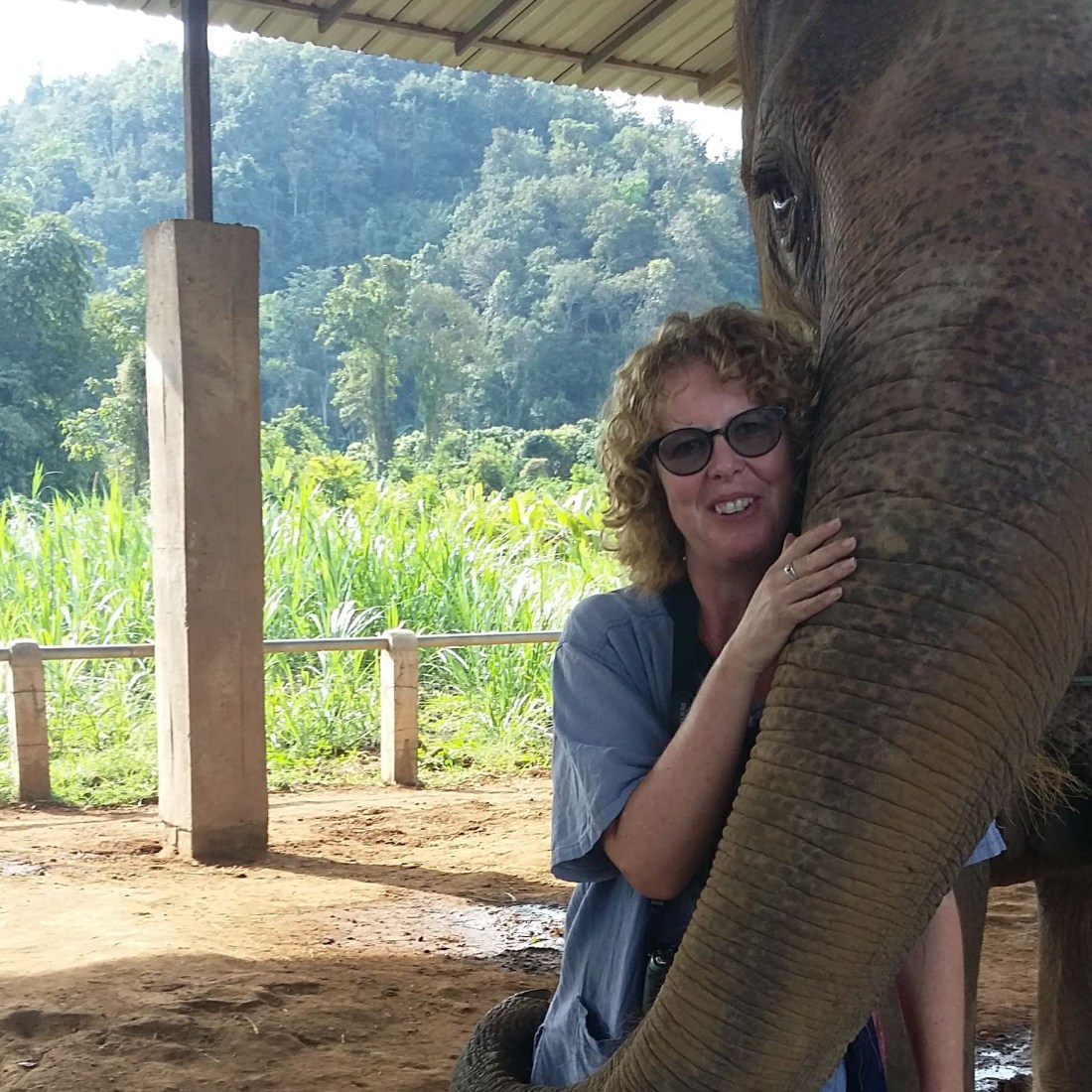
After the banana feast is over, its bamboo for desert. The wrap this round their trunks to break the shoots into smaller pieces. Things are a bit calmer now there are no bananas left and we can move in closer for a pat and a hug. Two of them have learned to give a hug with their trunks and one of the smaller ones, Tip, gives me several big suction kisses with the end of her trunk. With those big brown eyes, long eyelashes, and comical expressions on their faces, they just melt my heart. It is a truly amazing experience to be so close to these animals.

Afterwards we walk alongside them as they walk along the river bank, pulling on roots and leaves to eat and spraying themselves with dirt and dust to protect their skins from insects and the heat. We end up at a small pool where their trainer’s lead them in. With our costumes on we join them in the pool and have some fun, splashing water all over them…..such a great way for an elephant to cool down in the heat. Full moon never misses a trick to spray us all back with water from her trunk.

Later as I look back on the photos, I can’t help myself smiling and thinking how privileged we’ve been to spend the morning with these very cute and truly majestic animals. It’s a morning I will always remember.

20190105_031215

Bangkok to Chiang Khong: welcome to Thailand, the Land of Smiles


2019-01-02-15.23.42-1.jpg

As we wander along the tourist mecca of Khao Saan road in Bangkok with our new Intrepid group, the street food vendors are selling everything from chicken satay to fried scorpion! We are now more than 2,500 miles east of Delhi. The roads are busy, but well maintained and there’s no horn honking, there are proper pavements, minimal litter on side streets and our guide has allowed us out on our own, without any warnings about where not to eat! There’s no hassle from the street vendors and the toilets are ‘beautiful’ and not ‘amazing’ (code for it must be seen to be believed). The food is different, lovely sweet basil, lemongrass and plenty of chilli. I’m smiling…. we are in Thailand, land of smiles and everywhere all the gorgeous Thai people are greeting us with a smile, ‘sawadee ka’, palms together and a bow.

The next morning, we walk through the streets to meet our boat guide for a cruise along the Chao Phraya river and its famous canals (khlongs) where local people continue to live in traditional wooden houses built on stilts. I’ve been here before, many years ago but somehow the shock of eastern culture I experienced back isn’t as acute as it was then, after being in India for 6 weeks. We visit Wat Pho, one of the many stunning Buddhist temples of Bangkok, with its 46-meter gold plated reclining Buddha and then Wat Saket, situated on a low hill crowned with a gleaming gold chedi which houses a relic of the Buddha himself (more about him later). The temples are full of gold glinting against the bright blue skies and throngs of Chinese and Japanese tourists.


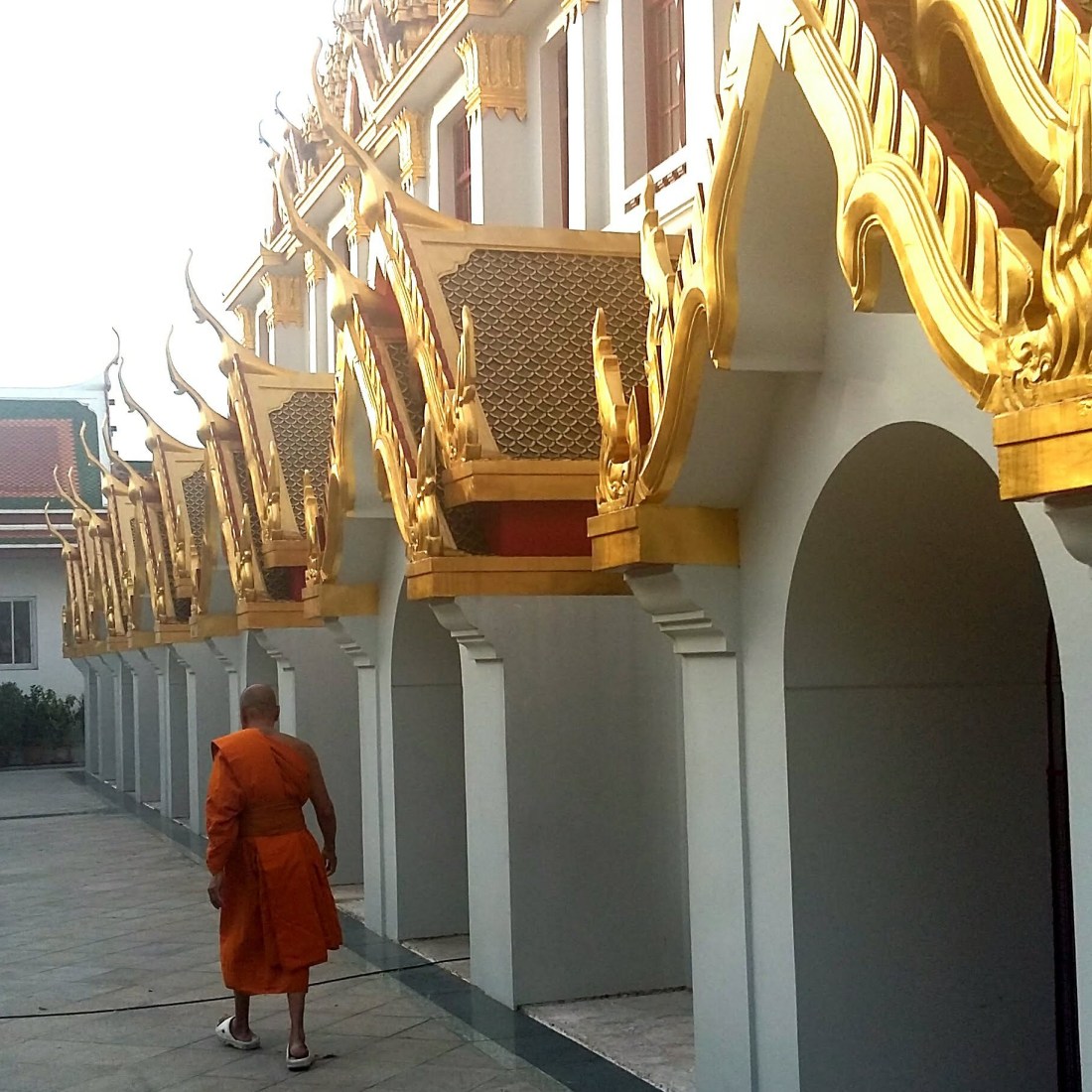
Our second night in Thailand and we board an overnight train for a 13-hour trip to Chang Mai, the jewel of Northern Thailand. After our overnight train experience in India, I’m ready for anything. This time it’s a completely different……it’s almost luxurious! There’s extra padding for the beds and bed boys make up our beds for the night, there’s a buffet car and the toilets are spotless. An interactive board informs us of our next stops, estimated time of arrival and whether the toilets are free and when they were last cleaned! The next morning, we arrive in Chang Mai refreshed and head to its most famous temple, Wat Phra That Doi Suthep, which is positioned on a mountain top, providing impressive views of the city. Legend has it that a white elephant, carrying the sacred relics of the Buddha originally chose the location of the temple and this temple remains an important pilgrimage site for Thai Buddhists to this day. The road up to the temple and the temple itself were originally built entirely by local monks. High above the city of Chang Mai, paper lanterns are drifting in the wind and the views are stunning. Despite the throngs of tourists, I feel a peace and serenity here. Inside the temple the gold glistens, the monks robed in orange are blessing those queuing with water, donations of money, food and flowers are being made and the chants and bells ring out across the hill top.


The next day on our way to Chang Kong, which borders Laos, we stop at Wat Rong Kun, also known as The White Temple, which is the creation of Chalermchai Kositpipat a famous local artist. This temple is not traditional and is unlike any other temple I have seen. Even those feeling a little ‘templed out’ are bowled over by the spectacle. Representations of the Buddha and mythical creatures are intertwined with unexpected pop culture heroes. Ironman sits outside on a park bench and everywhere there is white and tiny mosaic mirrors which make the spectacle appear more fairy-tale princess/ Thai style castle, than temple. Outside the main temple one must overcome hell (the cycle of death and rebirth) by crossing the bridge to reach heaven and nirvana…….it really is quite bizarre, but stunning and utterly magical.


Our final night in Thailand before we cross the border into Laos, and we have dinner in a local restaurant overlooking the hypnotic Mekong river. Our guide, Natthachai, himself a Buddhist monk for 14 years, tells us that Buddhists believe that happiness comes from within and that the middle way is the path to happiness. After a green Thai curry and a few Singha beers, I’m not sure if this is the middle way but I’m feeling happy and look a bit like the Laughing Buddha, the one with big tummy!


Goodbye amazing India: the weird and the wonderful

20181224_125754.jpg

As 2018 and our time in India comes to an end, it’s time to say goodbye and reflect on our stay in this amazing country. From the stunning spectacle of the Taj Mahal, to the backstreets of old Dehli, from our encounters with a tiger and leopard to our visit to Kerala’s tranquil backwaters, from meeting local people on the trains and buses to the craftsmanship and spirituality of the ancient temples of Tamil Nadu and Karnataka….it has been wonderful. I’m unable to pick out a favourite moment. Everywhere there is colour, ordered chaos and an energy which makes this country which is so full of history and tradition, feel so alive.

In amongst all this wonder there are some customs and cultures which are puzzling and I thought I would share just a few;

  • The Indian head shake

This endearing gesture, a cross between a nod and a shake, is usually silent and had us utterly confused…. does it mean ’no’, or ‘yes’, or maybe a ‘maybe’! Our guide has told us that the head bobble is the non-verbal equivalent of the Hindi word achha, which means anything from ‘good’ to ‘I understand’. So, it seems that there can be many interpretations and speed matters, with a faster bobble meaning ‘yes, I agree’ while a slow shake could mean ‘I’m not sure’ and then as the bobbling continues, ‘ok… I understand now’. Its quite infectious and I now often find myself joining in.

  • Cement adverts

They are everywhere. In the cities on big billboards, on the side of bus shelters and the walls of small shacks in villages in the middle of nowhere! ‘Start strong, grow stronger’, ‘Indulge in the joy of building’ they say. There is certainly a lot of building in India, whether it be new roads or bridges, or simply patching up a village shack or house. I find an article online from the Hindu Times; ‘Emotional ties are trying to be a strong adhesive for cement manufacturers, who wish to bond with their customers’ they say. But I’m still not getting it……it must be a culture thing!

  • Toilet etiquette

I’m sure you will have already heard some horror stories about toilets in India, so I’ll try not to dwell too long on this subject! I usually send my trusty toilet checker, John, in first before deciding whether to hold on a bit longer or not. There’s a flaw in this plan though, as he has a very poor sense of smell!  Squat toilets are still common, and I usually avoid unless desperate. There are a few other things which still puzzle me, like … why are the toilet rolls individually wrapped and stuck down with sellotape? and why is there a tap with a bucket/jug and drain in the toilet? and why is the toilet floor often completely flooded? These mysteries of toilet etiquette remain unsolved…. perhaps to be unravelled on my next trip to India!

  • Impossible roadside shacks and dodgy wiring

As we travel through India, we pass many a cheery roadside shack advertising anything from a tea shop, to a hotel, a garage, to an A&E department with MRI facilities. How does this work, they look just like shacks? I get the tea shop, but an MRI…really? Another memorable shop in Jaipur proudly displayed a glass cabinet full of 2nd hand spectacles, false teeth and glass eyes……. is there really a market for 2nd hand dentures? And then there’s the electrical wires which adorn the streets like tinsel draped around a Christmas tree, with their various connections hovering just above our heads. It’s got to be seen to be believed, and is it safe?

  • Bike culture

There are motorbikes everywhere. They seem to be a replacement for the family car. One scooter can easily take 4; a toddler standing up front, dad driving and mum riding side saddle, baby clutched in one arm and the other holding on to the bike ….and there’s only one helmet between them! It really is quite amazing what you can fit on a bike/scooter…. luggage, furniture, a 4-foot Christmas star decoration, or a passenger with a bandaged foot and his Zimmer frame! With so very little space, and the manoeuvrability required to navigate the roads in this country, the motorbike seems to be the perfect solution.

So, as I sit in Dabolim airport in Goa finishing this blog on the first day of 2019, we are leaving amazing India, home to the weird and the wonderful. We are sad to be leaving, but we are ready for our next adventure.

20181228_072724.jpg