The Indian selfie

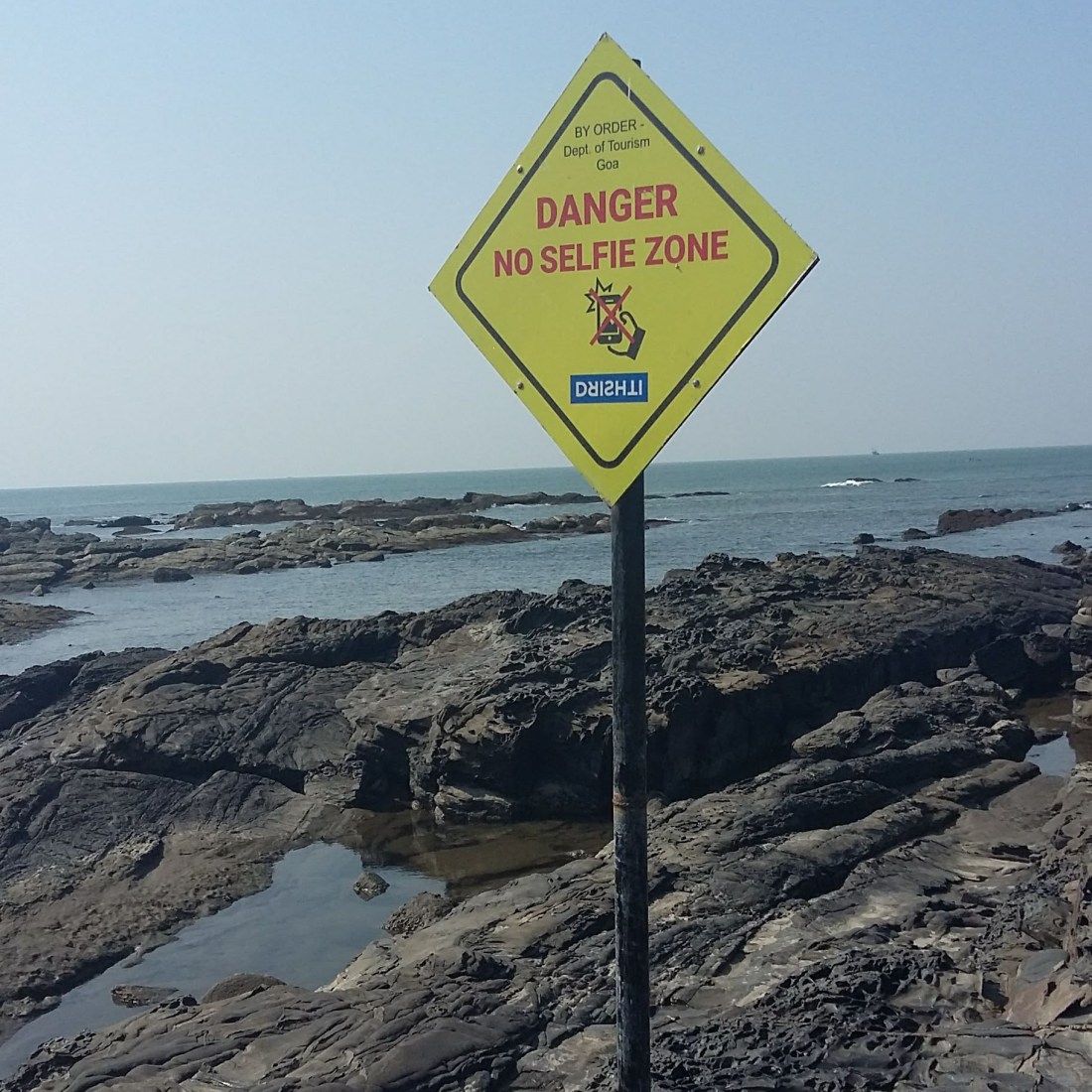
20181229_053538.jpgOur time in India has been marked by many wonderful experiences, but ever since we arrived, I have been puzzled by a unique Indian phenomenon…. the India selfie! From the very first day we ventured out, we’ve been brazenly approached on an almost daily basis for a photograph with the locals. Sometimes it would be a smiling couple, sometimes a group of young people, sometimes a family and a class of schoolchildren was not unheard of!


It’s not something we would ever dream of doing in our country, but here in India, especially in the big cities, away from the tourist beach resorts, it is common place. There’s usually a stare, perhaps a giggle, and then a smile and an “excuse me mam, excuse me sir…. selfie?” Sometimes just the ladies want one with me, sometimes we are snapped together with the whole group. It might be a quick selfie, but more often various family members congregate for a full-on group photo shoot…. quite an affair.

Its only later when I talk to our trip guide that he tries to explain this strange ritual. As only a very small proportion of Indian people have travelled outside of the country, coming across a ‘westerner’ is a relatively rare occurrence. Many Indian tourists visiting the city, like us are excited to share the stories of their adventures and of meeting a strange white Scottish couple. A photo with their new-found ‘friends’ provides the evidence when they return to their friends and families.  In a country of over 1.3 billion privacy is a luxury and this in combination with their inquisitive fun nature makes the ‘Indian Selfie’ the most natural gesture in Indian culture.

And so as we travel through India I try and shake off my stiff upper lipped, politeness, evade my inhibitions and step forward to ask for a ‘Scottish selfie’……..as long as it’s safe of course!

Christmas in Goa

20181225_033556

As I sit this Christmas eve morning waiting on John to come back from his 8am yoga session with Ruban (it’s far too early for me!), we are packed again, ready to head to Mandrem beach in North Goa. We jump in a taxi with Alex our taxi driver who brings his wife and 4-year-old son Cudson along for the 3-hour drive.

We have been in Palolem for 8 days and have thoroughly enjoyed our time here. There’s been no packing and unpacking, or searching for things in our bags, setting our alarms for early morning starts or buses and trains to catch. Instead, our days have been lazy, filled with lying on the beach, swimming in the amazingly warm Arabian sea, walking along the coconut fringed golden sands and watching the sun set of an evening. This has been our chill out time and chill out Goa has delivered.

Goa feels different from the rest of India. Time has reset itself, were in a slow gear. It’s less frenetic and assertive and much more laid back. Where other resorts around the world have grown and become more commercialised, Goa seems to have remained the same. There’s no big hotels or tacky restaurants and shops. Instead colourful beach huts and restaurants are dotted along the shore front and there is nothing that rises more than a storey high. Goa was previously under Portuguese rule and joined the rest of India in 1987, much later than any other state. Perhaps the laid-back Portuguese vibe along with the positive, cheerful Indian persona has influenced its culture and values.  There are more Western visitors, but lots of Indian tourists also spend time here, especially over Christmas and New Year, which is the main Indian wedding season. Large Indian family groups congregate on the beach, whooping and screeching as they jump the surf and cover themselves in mud…. all fully clothed of course!  And there is also the beach cows and dogs. The cows stick together and usually wander off to find shade as the heat of the day starts to build. But the dogs stick together in packs and patrol their territories with fierce determination throughout day and night.

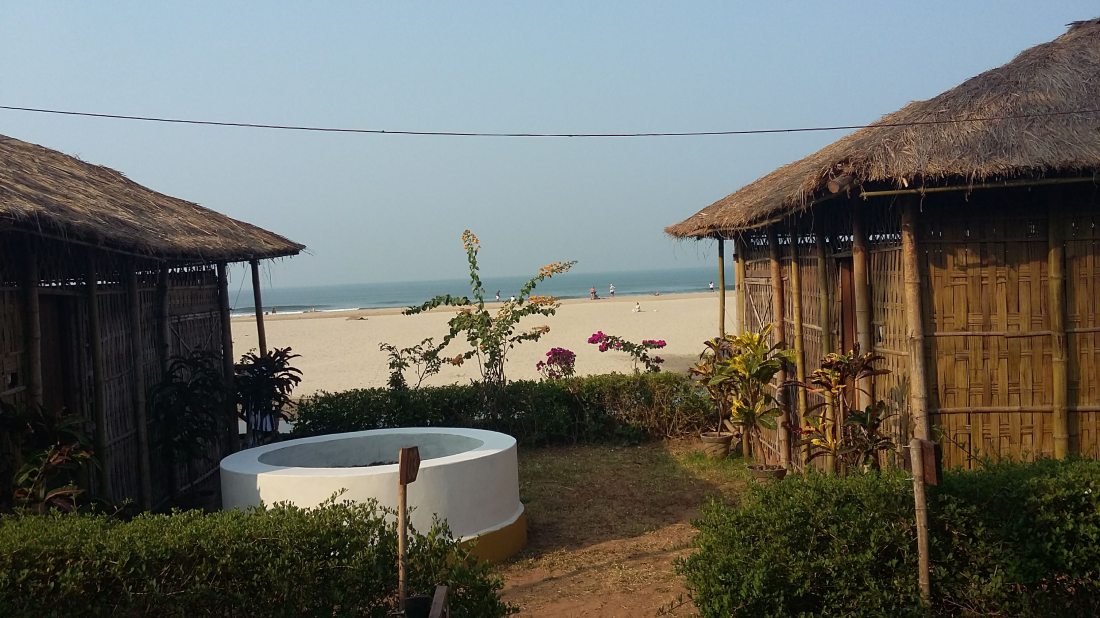
Its Christmas morning and we wake under our mosquito net, in a rattan and bamboo beach hut set about 30m from the beach. There’s no aircon, tv or fridge. John booked our last apartment in Palolem. I’ve always wanted to sleep in a beech hut, so when he wasn’t looking, I booked it! We’ve never had a Christmas without family and it’s a strange feeling being so far away. We are 5 and a half hours in front, so we will wait to speak to them later.  After breakfast we take a walk to another beach, but on the way, we ford two rivers, wading up to our waists. Half way across the second I’m struggling; the current is extremely strong and the rocks on the river bed are sharp. I’m helped by an older Russian lady (she must be in the know!). I sat thank you and wish her a Merry Christmas.

As we arrive back at our beach hut and sit on our balcony watching the pink Indian sun dip below the horizon. There are no presents to open, no family to visit and no turkey dinner. We spend the next few hours phoning our family and texting friends. Its lovely to hear their voices and feel that they are close to us this day. It’s been difficult not being with them this year, and this Christmas day will be a day to remember, a day that we will recall with our children and grandchildren in years to come.

Kerala: land of the coconut, spice and the backwaters


20181210_110951-1

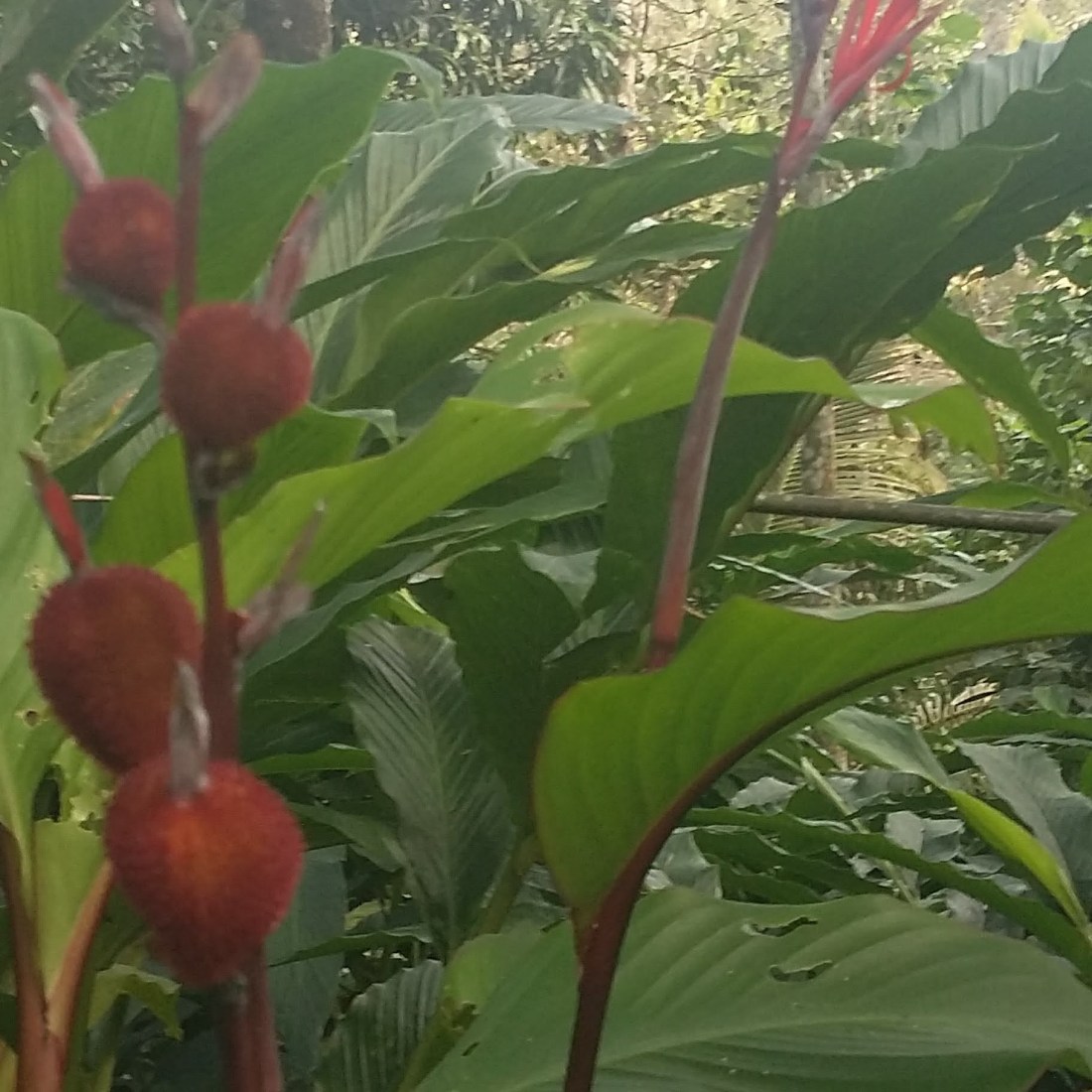
After a 4-hour journey on a local bus, travelling 140Km and climbing 2,000 feet above sea level, for 100 rupees each (about £1), we cross the border into Kerala, into a nature reserve called Periyar. Kerala is famous for its spices and our first visit is to an organic spice plantation. Kerala, a major producer of spice for many centuries, was a key to the eastern spice trade route. The plantation we visit grow a range of spices including; vanilla, cardamom, cinnamon, nutmeg, ginger, turmeric, pepper, coffee and cocoa, all side by side in a hill top forest location. Our guide, Maji, is passionate about his family’s business and eagerly describes the growing and harvesting processes involved. Did you know that vanilla, the second most expensive ‘spice’ grown in the world, takes up to 7 years to fully mature? The seed pod, which is pollinated by hand, takes 9 months to grow and a further 3 months of curing before it’s ready for use. A good quality vanilla pod is oily, and should easily roll around your finger, lasting up to 4 years if stored properly. All hail the vanilla pod! The area around Periyar is particularly famous for green cardamom and 75% of the world’s supply is grown in these hills. The aroma is just divine, and I vow to cook with more cardamom in the future. Every tree and bush and tree round us seem to be capable of transforming into a spice; there’s ginger and turmeric which are roots grown in the ground, cinnamon is harvested from bark, malabar pepper and coffee robusta and aromica trees are plentiful here and their seeds and fruits drop from their branches. The seeds of the myristica fragrans tree produce both nutmeg and mace and when we finally make the shop there is some delicious dark nutmeg chocolate which is made with locally grown cocoa beans.  There seems to be multiple health benefits to be had from these spices; blood thinning turmeric, diabetic sweetening from cinnamon and tea made from ginger root which can cure an upset tummy. John goes a bit overboard in the shop. He hasn’t seen dark chocolate for 6 weeks, so he buys one of each kind, just in case!

The next day we have an early morning ‘Green Walk’ with the local rangers. Leach socks (thick cotton gators which tuck into your shoes) are dispatched and we sign a leech disclaimer form! We set out with trepidation, the early morning mist is still slowly clearing in the forest and the whoops of the marauding languar monkeys surround us. In the distance there is Indian music, most likely a temple, an early morning call to prayer. Our guide spots a white breasted kingfisher on a tree and he points out hundreds of tunnel spider webs in the dew of the grass. As we walk through a particularly boggy patch, the leaches appear. There smaller than I thought they would be (thank goodness) and move across my shoes like a slinky toy climbing down the stairs. There are tigers and leopards in these forests, but our guide assures us we are unlikely to come across them, although he does point out a fresh tiger print. Further ahead we come across a heard of Sambar deer. We finish our walk as the sun sparkles through the trees and the village children eagerly say hello as they make their way to school.

Another day and another busy local bus and then a motor boat takes us to Allepey, which is in the heart of the Kerala back waters. We are staying in a homestay tonight, a kind of bed and breakfast where the whole family are involved. It’s hot and very humid, but serenely beautiful. The backwaters are a network of interconnected canals, rivers and inlets forming more than 900 km of waterways. The land interspersing these waters was reclaimed in the 18th century by using mud and the husks and fibres of the coconut tree, which surround these waterways. Much of the land sits only a few meters above sea level. The paddy fields behind are regularly flooded by opening sluice gates, to provide 3 harvests of Kerala rice a year. Our host, Vinnie, takes us on a village walk and talks to us about the way of life in this part of Kerala. The villagers live a simple life and the only new technology to reach these parts in the last few hundred years seems to be the mobile phone. We learn that every part of the trees and bushes which grow here is used for something. All 9 parts of the coconut tree are used; the root is ground into a powder which treats gall bladder, urinary infections and kidney-related diseases, the leaves of the banyan tree is commonly used as a tongue cleaner and the trunk of the banana tree is ground up producing a drink to help with weight loss. The villagers still use large stones outside their basic homes to grind and crush spices and there is another stone by the river which has been roughened to wash their clothes.

As we make glide along the olive-green waterways the next morning, the riverbanks are fringed by hundreds of coconut trees. Cornflower blue sky smile down from above and the kooka bird calls.  We finally say our goodbyes to Kerala, land of the coconut, it has been a magical experience.

The overnight train: Mysore to Mamallapuram

20181207_014539.jpg

Our time in Mysore is nearly over and I can feel the knot in my stomach tightening like a coiled python. I know it’s coming, the one ‘real experience’ I have not been looking forward to on our trip, the dreaded overnight train! We visit a local family for our ‘last supper’, a simple meal of baby aubergine curry, vegetable and chicken biryani, onion raita and chapati. For desert we have apple and banana custard and gulab jamun, a  deep fried ball made from khoya, dipped in rose flavoured sugared syrup. The whole family is involved. The head of the household and grandfather proudly tells us his secret recipe for biryani. His daughter has made the aubergine curry and his granddaughter (who is 6) serves us our desserts and makes mischief in the background while we eat. After saying our thanks and goodbyes and an exchange of recipes, we are on our way to the train station.

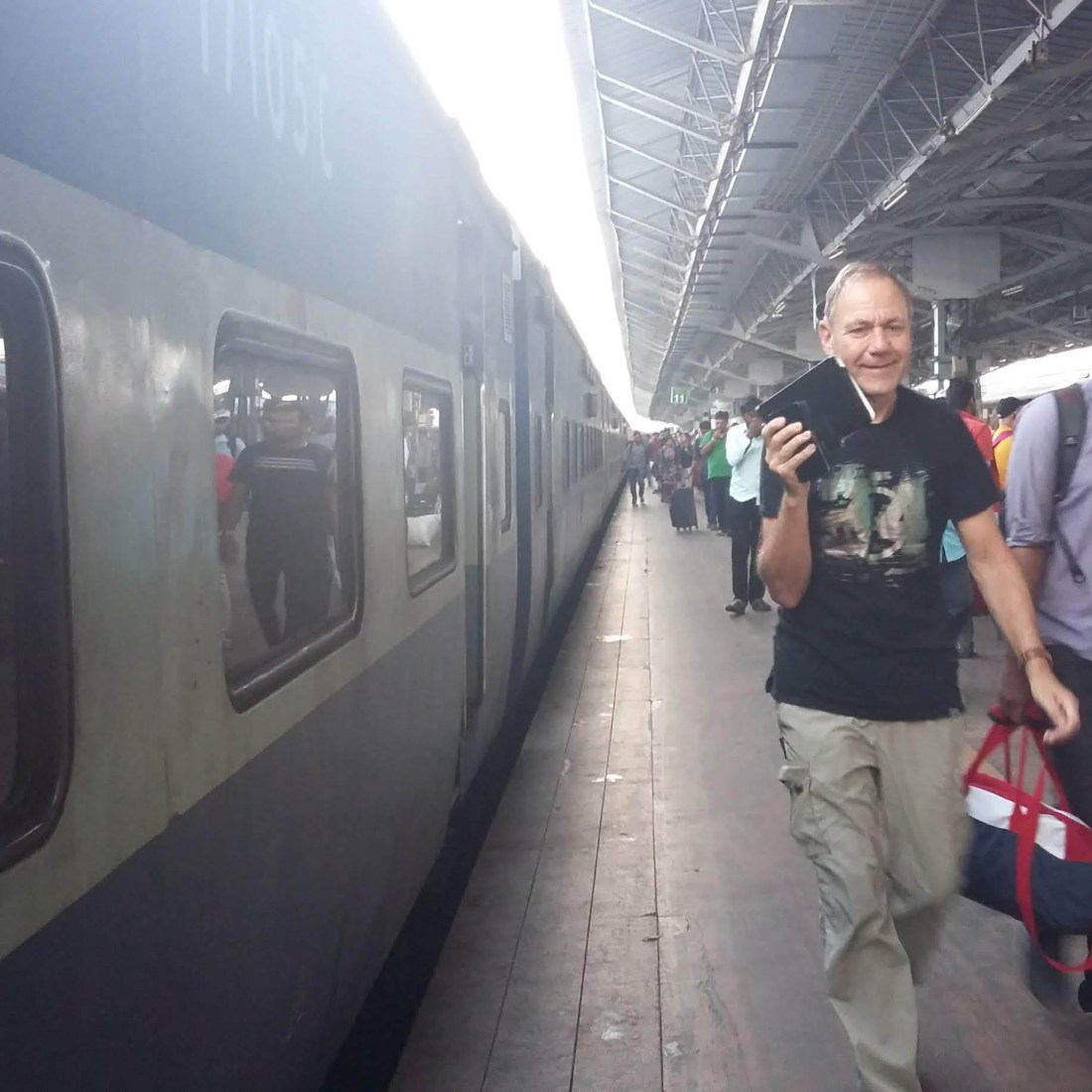
Our train starts in Mysore and the 28 carriages are patiently waiting for us when we arrive. Our guide, Aathi tells us that this should be a ‘comfortable trip’ ( I think he means in comparison to others) as the train terminates in Chennai around 7.30am, where we get off. So, there will be no scrambling off the train in the middle of the night in the allocated 40 seconds that many of the stops allow. There are 5 of our group sleeping in one compartment (triple bunks on each side), however we have an Indian ‘friend’, Johnson. He politely introduces himself and seems a little bewildered to be surrounded by so many white faces. After the introductions and after some initial chat we get our bunks ready to settle down for the night. I visit the toilet on the train early and then switch my bladder to ‘camel mode’, determined to make that my only trip on the 9-and-a-half-hour journey! The bunks are rock hard, however the sheets which have been pressed and neatly tucked into large brown envelopes, look freshly laundered. There’s no privacy to change into our PJ’s, so we sleep in our clothes and there’s no way I’m brushing my teeth in that toilet! I’m glad that I’m not on the top bunk as it’s quite a scramble to get up and a long way to fall, if there were to be an emergency stop during the night. I’m in the middle bunk which is the back of the lower seat swung up and suspended by a chain from the roof.  As I lay down on my bunk the train is rocking and there are frequent hoots, however somehow with the help of ear plugs, I manage to fall asleep but wake every hour with the pressure building in my skin from the granite bunks. And then before I know it, the early morning light is seeping through the grubby windows and everyone is stirring; travelling families, those heading off to work and a few bedraggled tourists. We arrive at Chennai train station, which is packed with people, quickly grab a tiny cup of sweet chai and we are back on our minibus which is heading to Mamallapuram. I made it! I smile, the knot in my stomach has gone, but the pressure in my bladder is building… only 45 minutes to go to a half decent toilet!


Auroville: working towards human unity or a new religion?

20181208_074147-1

The Auroville Charter:

Auroville…..

  1. belongs to nobody in particular but belongs to humanity as a whole. To live in Auroville one must be a willing servitor of the Divine Consciousness.
  2. will be a place of unending education, constant progress and a youth that never ages.
  3. wants to bridge the gap between the past and the future. Taking advantage of all discoveries from without and from within. Auroville will boldly spring towards future realisations
  4. will be a site of material and spiritual research for a living embodiment of an actual Human Unity. (The Mother, 28/02/1968)

Ten kilometres north of Pondicherry exists a place called Auroville, home to nearly 3,000 Aurovillan’s. People from many countries and religions live together above all creeds, politics and nationalism, in a universal town of peace, harmony and human unity. If this sounds to good to be true, forgive me, I’m quoting this straight from the Auroville information leaflet I picked up from the bookshop. I obviously hadn’t read our trip itinerary closely enough to realise that we would be visiting, or that a place like this existed in India. On the surface the concept seems similar to the Findhorn community which exists in the north east of Scotland. However, after visiting, I’m not so sure.

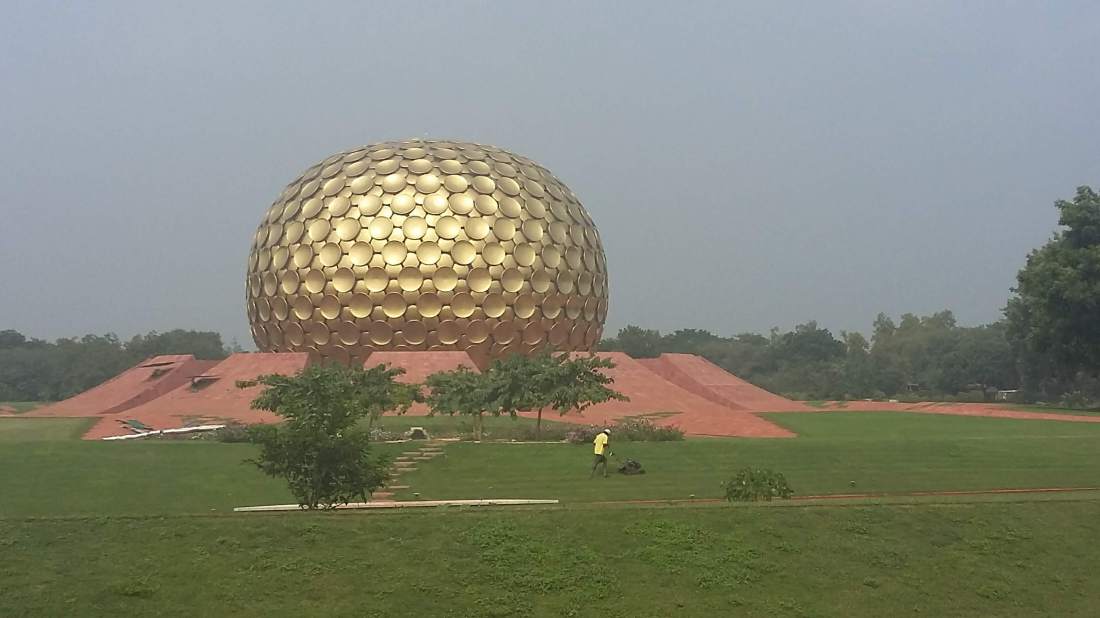
We are on the bus, and the usual street stalls, wandering dogs and cows are along the roadside, but as we move towards Auroville….it changes. There are many more non-Indians and shops selling hippy style clothing and jewellery. As we drive into the car park, there is no litter and the surrounding gardens are immaculately manicured. We walk to the visitor centre and there are several lovely shops selling handicrafts made by the Auroville community…. up-cycling is big here! The cafes have a French feel and we have a very nice earl grey tea (the first in India), a pot of French pressed coffee (John is in heaven!) and an apple tart. They even sell biscotti biscuits …. it’s all a bit surreal. It feels like a chilled theme park in the middle of chaotic India. We watch an introductory film on Auroville and then start our walk to the Matrimander viewing point. Auroville is the vision of the Universal (also known as the Divine) Mother (a French women) and incorporates the teachings of Sri Aurobindo (an Indian priest and poet).  Along the 2km walk to the Matrimander are various stones depicting the 12 qualities of the mother; progress, perseverance, peace, courage, peace, etc etc…. and then around the corner, past the 300-year-old Banyan tree which marks the geographical centre of Auroville, there it is…. the Matrimander, the soul of Auroville, the living symbol of this place’s aspiration, a gigantic, golden globe which dominates the freshly cut grass and trimmed bushes. Inside the Matrimander there is an inner chamber, a place for silent concentration (not mediation) which houses a spherical optical lens reflecting light from the sun into its  chamber. However, we can’t go any further. Only Aurovillan’s and those with prior permission can enter.

Some of the principles of Auroville do hit a chord, but others just don’t sit right with me. Our trip leader tells us that apparently the community is mostly made up of non-Indians, and that despite the goal of collective humanity and reducing internal money exchange, newcomers wishing to join Auroville have to be in good physical and mental health and have financial means of their own to support them through the first few years.  After joining the community any immovable assets created will then belong to Auroville. There seems to be a great importance placed on The mother and her teachings. So if this isn’t a religion, why are all Aurovillans following her teachings? There’s talk of man being surpassed by the advent of a new species and of developing discipline towards, and union with ‘the divine’, growth of true consciousness, and Auroville being the cradle of a new ‘superman’. Nevertheless, I am impressed with their research into new types of economy, governance, ecology and renewable energy. If this is a way to progress towards saving humanity, then I wish Auroville good luck in achieving its goal.

I’m interested in finding out more and pick some leaflets up from the bookshop. We are on the bus heading to Pondicherry before I realise that I should have paid 150 rupees for the leaflets I thought were free to ‘collective humanity’…… oops!

Tamil Nadu, Karnataka, temples and the Hindu gods

20181208_114030.jpg

As we make our way through the states of Tamil Nadu and Karnataka in south India, famous for its thousands of Hindu temples, my questions about Hindu religion, mythology and its customs continue to grow, such as; ‘Who and why are there 33 million gods?’, ‘How do you choose which god to worship?’ and ’why does Ganesh have an elephant head?’……

Our Hindu temple trail starts in Mysore, famous for its essential oils. Chamundeshwari  Hill temple is set high above the city and is dedicated to Shiva, one of the three main gods in the Hindu religion. Shiva ( who is blue) is the ‘destroyer of evil things’ and Chamundeshwari temple seems to be a popular place! Enthusiastic Hindus line up to make offerings of fruit, flowers and spices and in return receive a blessing from the priest. It all seems a bit quick and mechanised for something so holy! We learn from our guide that all Hindu gods have ‘vehicles’, usually animals or birds, which transport them from place to place. Shiva’s vehicle is a bull, so this temple is adorned with bulls, in addition to many statues of Shiva.

We are back in the bus passing fields of rice, sugar cane, coconuts and palms. Dotted along the roadside there are brightly painted houses, wandering cows and shacks selling coconuts, chai and Indian snacks. We arrive at Keshava temple, built in 1268 but defaced by the mogul army some hundred years later. Invading armies would chop the noses and arms of all the statues in a temple. This was considered as a great insult and these temples were no longer seen as fit to worship in and are now referred to as ‘dead monuments’. Keshava temple was dedicated to Vishnu, the ‘operator’ god and was built using an interlocking system of soapstone. It took 500 sculptors 68 years to carve the temple and it boasts over 6000 individual statues. The carvings are stunning. Every detail of Hindu mythology have been meticulously etched into the stone. Our guide, Jacob shows us some interesting carvings depicting scenes from the karmasutra, which back in its day was considered as THE sex textbook. Inside 3 statues of Vishnu, roof carvings depicting the opening of the lotus flower and 16 magnificent columns, created with help from elephants and horses are housed. This temple lives up to its reputation as ‘the Island of art’.

On the south east coast of India, Pondicherry, a previous French colony sits in the Bay of Bengal. We visit a temple dedicated to Ganesh, the Elephant God, considered to be the remover of obstacles. He is the son of Shiva and Parvati (who has 4 arms). Apparently, Ganesh lost his head in a case of mistaken identity (this seems to be a common theme in Hindu mythology!). His father then asked an elephant to donate his head, thus the elephant headed god, Ganesh was created. There is an elephant outside the temple. Inside it is colourful and crowded with curious tourists and eager Hindus queuing for a blessing. The walls of the temple are adorned with the stories of Ganesh and his family. I like Ganesh, he seems a cheery chap, removing all those obstacles!

Finally, we reach Madurai, an ancient city of 3 million, famous for Shree Meenakshi Temple, dedicated to the goddess Parvati, wife of Shiva. This temple is remarkable. Five outer towers stretch to the sky and are full of blue, green and red statues of Hindu gods, goddesses and mythological creatures. More than 10,000 people visit daily. When we visit in the early evening there are around 2-3 thousand people in the vast halls. Some have come to celebrate an engagement, some to pray for new life and some to make Pongal (dish of cooked rice with milk and jaggary) to celebrate and receive blessings for the birth of a new baby. The pilgrims from Kerala are here, dressed in long black dhotis. They are fasting for 45 days (one meal a day, no meat, sex, alcohol or tobacco). They spend 10 days praying and receiving blessings at many temples across southern India. Inside this temple it is a mirror of daily life in India. Its busy, colourful and full of families sharing food and celebrating life. The scent of jasmine and incense drifts across the halls.

I ask Usha about the 33 million gods. ‘They are all relatives of Brahma, Shiva and Vishnu, or are one of their numerous incarnations’ she says. Every god is the god of something…… luck, money, knowledge, patience, bravery, patience, remover of obstacles, etc, etc. You can make offerings to any of these gods, although usually there is one ‘family god’, which has been passed down through many generations. I guess this is not so different in our western culture, where many have turned to a god of their own choosing, As I sit on the steps of the pool at the centre of Shree Meenakshi temple, the mother of all temples, I choose the god of peace, love and adventure, wherever he may be……?

Bandipur: our jungle retreat

20181204_121506-e1544165182656.jpg

From Coonoor we take private cars to drive down the infamous Kalhatty Ghats road. Signs reminding us that ‘Speed thrills but kills’ and ‘Ghats drive could be last drive’ along with a countdown of each of the 36-hairpin bends make our journey an interesting one. Large notice boards remind us of the number of accidents, injuries and deaths on this road over the past 5 years! We finally arrive in one piece at our Jungle retreat and head out for our safari in Bandipur Tiger reserve.

On our two-hour trip, we see langur monkeys, spotted dear, peacocks, egrets, a hawk eagle and a spotted owlet peeking out from a nest hidden in the bark of an umbrella tree. Our driver is eagerly looking for something else and 90 minutes into the trip as the light starts to fade, he spots her…… a female leopard hiding deep in the bush. At first, it’s hard to see her and then as I look closer, two pale green eyes stare back, fixed on the truck and all inside. She is standing her ground and is motionless, blending seamlessly into the background foliage except, those mesmerising aqua green eyes.  There’s a noise and she move quickly; her lean body and amazing camouflage is revealed as she passes the back of the truck. She is not big as the tiger but is built to run and to hunt.

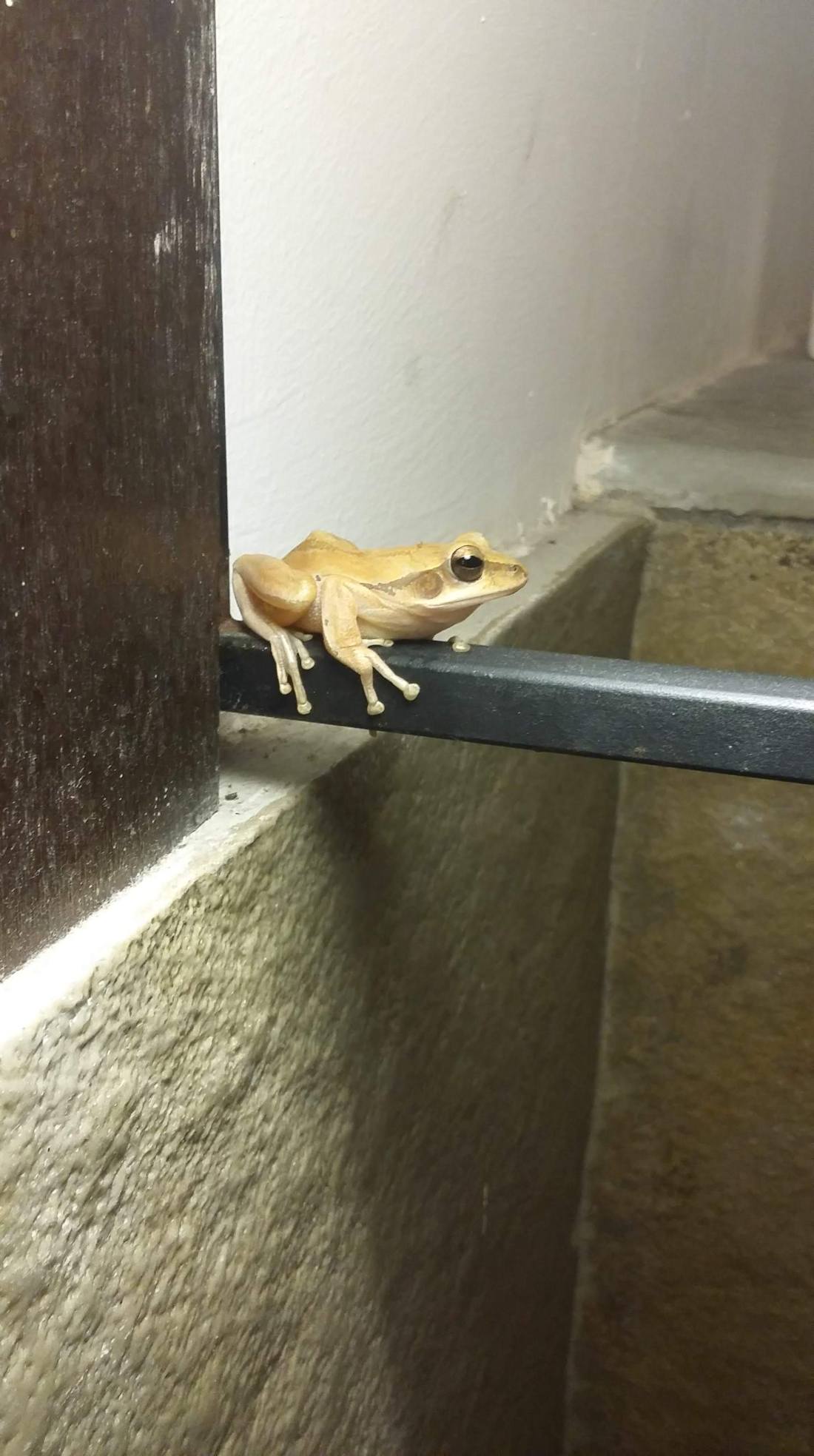
As she moves into the bush there is a shout… elephant ahead, and we move forward to be greeted by the sight of a large male elephant about 50 meters from the roadside. Later, after an amazing meal at our jungle retreat, we head back to our cottage and find a very brown cute frog (no, it wasn’t John!) in our bathroom. It’s the end of another amazing day, and I close the bathroom door and put the lid down on the toilet to make sure that we are both safe and sound for the night ahead.

img-20181204-wa0017.jpg


Hill stations, tea gardens and the toy train

20181203_050449

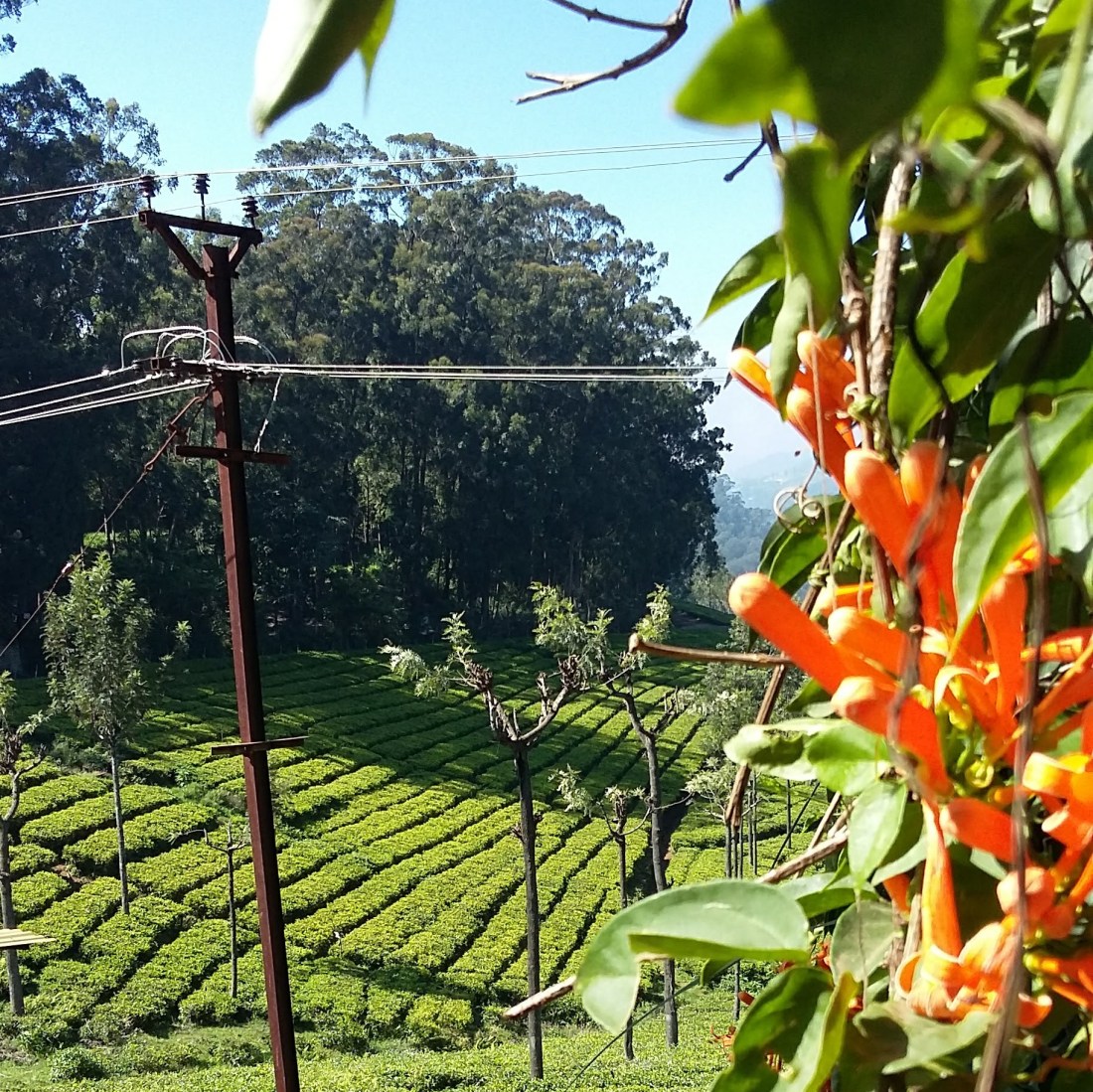
We are now in Coonoor, a hill station in the state of Tamilnadu, which sits 6,250 feet above sea level. It’s cool up here, 15 degrees centigrade and its lush green. The hill sides are decorated with tea bushes which are bathed in early morning and late afternoon mist.  It often rains here in December and the tea plantation factory we plan to visit is usually closed for maintenance on Mondays. But today, the mists have vanished, and the mid-morning sunshine is glorious. We have blue skies and the factory is operating today ……. Another lucky day!

Swami and Swami have been growing and producing Highfield Teas since 1930. The tea gardens are planted on a slope and the bushes are planted out after 1 year and trimmed every 5 years. Different portions of the tea bush are used to produce different teas and our guide James, tells us that white or silver tip tea, has the greatest health benefits, and is produced from the very newest shoot of the tea bush. These shoots are picked from the youngest plants (<15 years old) and are always plucked before sunrise. The next highest grade of tea is green and then black and finally Indian tea powder which is picked from the oldest plants and is considered the lowest grade of tea. After plucking, the leaves are initially dried or ‘weathered’ for 8 hours, collected and then crushed, rolled, oxidised and roasted. James tells us that the women do the more monotonous jobs, which require more patience and the men will do the jobs requiring more physical strength. Women and men both work 8 hours a day, 6 days a week and are payed the same for the jobs they do. The workers receive many benefits; homes, health and education for all their family members. We partake in some tea tasting; masala chai, black tea, white tea, ginger tea and chocolate tea, which taste like hot chocolate…. yum. The views are stunning over the tea gardens and it’s a million miles away from hectic north India. The houses are painted vivid colours, blues, pinks, greens and purples and are scattered across the hillsides in groups …. a bit like a hilltop Tobermory.

We head to the train station to catch the ‘toy train’ to Ooty, the main town and highest hill station of this region. The toy train runs on a smaller gauge track and was previously used to transport the tea workers from plantation to plantation. We chug slowly across this amazing landscape, leaning out the window, breathing in the mountain air and stopping at stations; Wellington, Aravankadu, Lovedale and finally Ooty. We spend some time in Ooty’s botanical garden which is filled to the brim with schoolchildren, Indian tourists and families before heading back to Tiger Hill cottages, passing a fish and chip shop, advertising ‘live fish and chips’! We all chuckle, hoping this isn’t on the menu for dinner.

Hello South India

20181202_0205291

After a 3-hour flight we have a taxi transfer arranged to Kaleeveedu Lodge on the east side of Kochi. I had a picture of Kochi being a sleeping fishing town. But we whizz past new shopping malls, restaurants and car salesrooms and later I learn that Kochi has an urban population of over 2 million.  Its hotter and more humid here… we are in the tropical monsoon region of Kerala.

Kochi has a strong Portuguese influence and was also occupied by the Dutch as well as the British. There is a large Christian population in this region (around 20%) and our guide for the day, Peter, introduces us to several small Catholic and Anglican churches, before visiting the palace, which is a much smaller affair in comparison to those we saw in Rajasthan. In addition to the climate there are subtle differences in the local dress. For the women, there are no headscarves, more jingling anklets and toe rings and the men wear their patterned dhoti’s long or tucked up rather than wrapped between the legs.

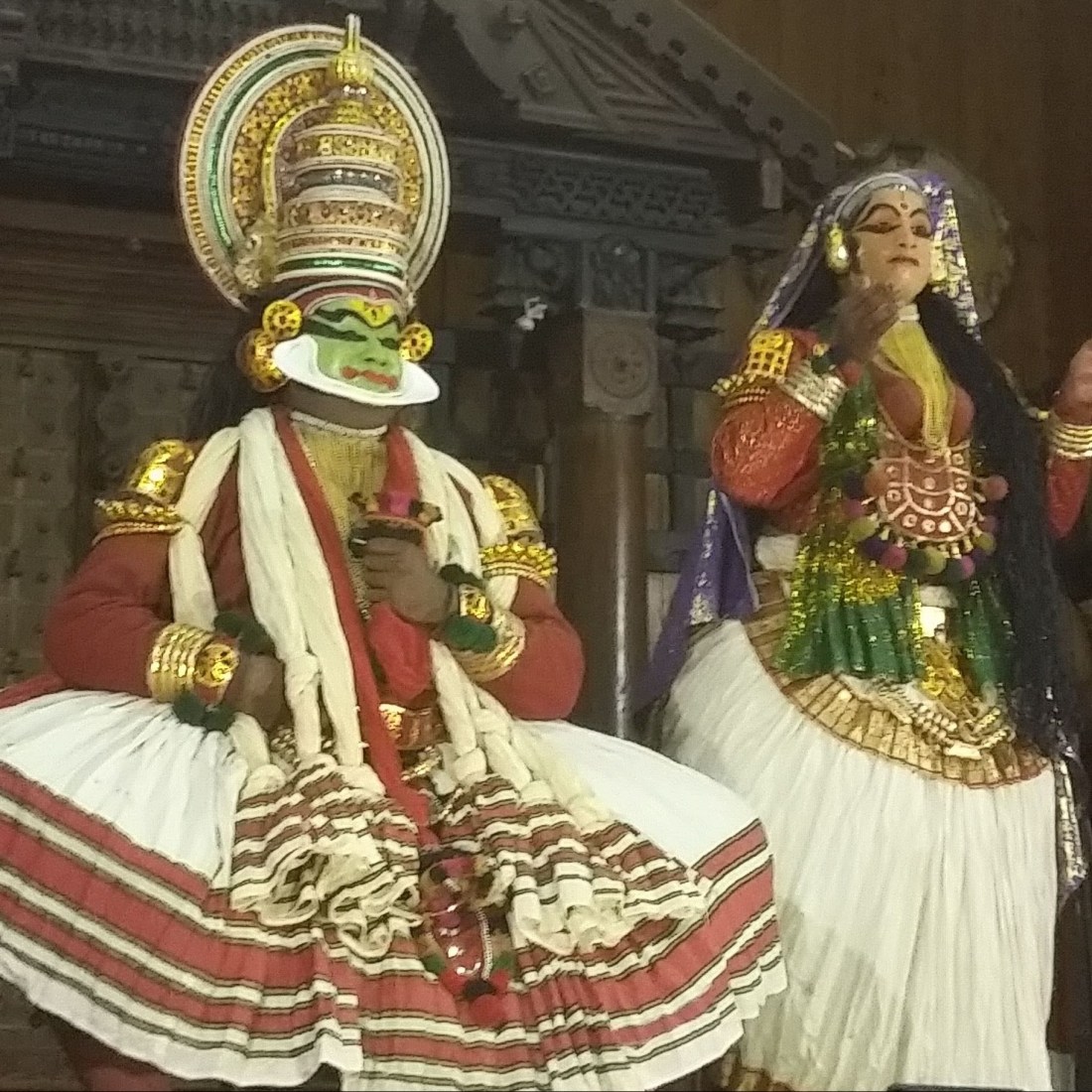
We spend the evening visiting a local Katakali show. The actors, musicians and face painters are all men and train for up to 6 years. The plot seems to be based around what the Hindu gods are up to, but to be honest it lacks a bit of substance! No words are uttered, and the story is expressed through facial (particularly the eyes) expression and body and hand gestures. There’s a lot of chanting and drumming going on… we’ve been advised to bring ear plugs which have been appreciated! It’s all a bit strange but the experience has been fascinating. Hello South India… we are looking forward with anticipation to the next 2 weeks.

20181201_125750-e1543854243126.jpg

Pushkar: camels, blessings and the temple of the second wife


20181127_121713-effects.jpg

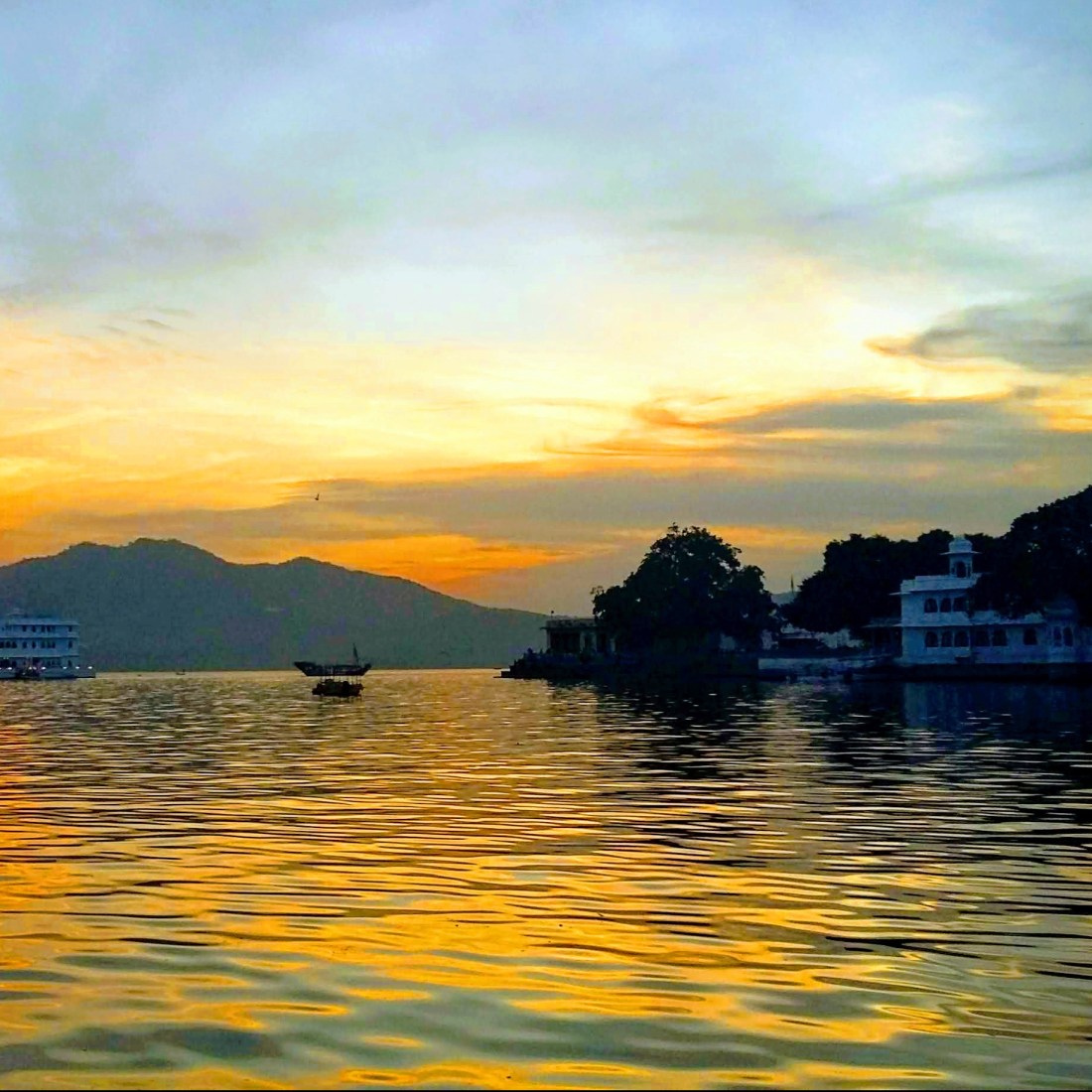
After our camping trip and two days in Udaipur, I’m feeling a bit more chilled. In comparison to the frenetic streets of Delhi, Agra and Jaipur, Udaipur has a much slower pace. There is less traffic and hard sell, more tourists and we have even spotted our first restaurant selling pizza!  The views over Lake Pichola from the roof top of our hotel are spectacular and the air is fresher. I have enjoyed my time here. Maybe the palm reader predicting a long lucky life (I’m going to live till 99!), has given me a new perspective!

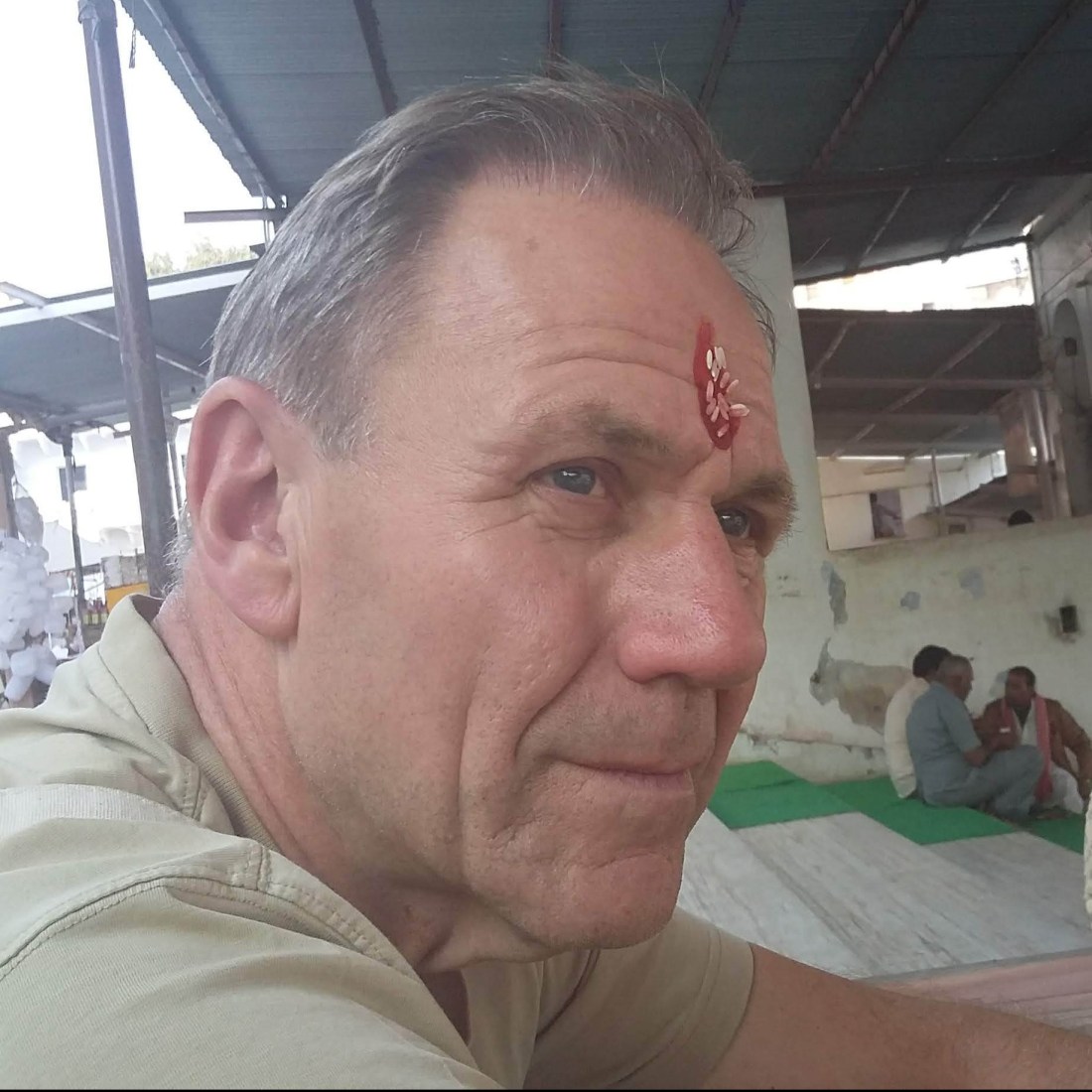
We arise early to catch the 5.30 am train to Amjer, and after a 30-minute taxi transfer we arrive at our hotel, high above the holy city of Pushkar. Pushkar is home to Lord Brahma, who is a creator god in Hinduism. Of the hundreds of thousands of temples across India Pushkar is the only city which hosts temples dedicated to Lord Brahma and is considered one of the 5 holy places that many Hindus make a pilgrimage to in India.  Pushkar is also home to 12,000 priests and both meat and alcohol is prohibited. However, if you are feeling in need of a lift a ‘special’ lassi, a traditional yogurt-based drink of India, is laced with marijuana in Pushkar! The contradictions in this country never cease to surprise and amaze us….. nevertheless our guide strongly advises us against trying this local lassi. We have a quick lunch and emerge from the dining room to find a protest going on in the grounds of our hotel. Local villagers who have been disputing land boundaries with the hotel, have driven a tractor (and a heard of goats) into the hotel wall, built a funeral pyre and proceeded with a cremation in the grounds of the hotel. One of the local priests arrive to take us to the lake for a blessing ceremony and we are ushered down the hill away from the spectacle. The blessing at Pushkar Lake involves releasing spices, flowers, rice and sugar into the lake and receiving a bindi. A cotton wrist band is tied around our wrists. It is a place of serene calm and we all sense an inner peace.

20181128_094224-e1543681832929.jpg

Meanwhile on our return we are quickly transferred to another hotel, for fear of trouble brewing later and then we set off for our camel safari into the Thar desert. This arid desert covers an area of around 80,000 square miles in north western India. The camels are kind of cute, in a crazy kind of way and in the main they behave themselves!

The next day we have a free morning. Having a certain affinity with Lord Brahmas second wife, Gayatri, I feel compelled to visit her temple! Legend has it that after marrying this second wife Lord Brahma’s first wife, Sarasvati, was very angry so cursed her husband and moved up to the hill above Pushkar, where her temple still exists to this day. On entering the temple, we receive a flower and are instructed to place a petal on each of the shrines of Lord Brahma’s guardians, and then to break the rest of the flower in two placing one half on the shrine of Lord Brahma and the other on the shrine of Lord Ganesh. Our student guide informs us that such a ceremony will ensure a healthy, wealthy and happy life and the next time we visit Pushkar we must bring all our family so that they too will receive such a blessing. I wonder if the Miller and Renfrew kids are up for a visit to Pushkar?